A Public Service Government Division Platform Reached 42% More of Tier 2 & 3 Cities
About the Client
One of India's top government departments approached us to make their digital platforms more accessible to people who don't speak English or Hindi fluently. This department oversees communication for public services, policies, and welfare programs.
Challenges
The government website was intended for everyone, but millions of people in Tier 2 and Tier 3 cities were left out due to language limitations.
Most of the stuff they had online was only in English and Hindi. That was good for people in cities, but left many people in other parts of the country out. The department knew this would be hard, so they put money into localization, starting with their website and moving on to public documents, announcements, and digital forms.
From the start, it was evident that there would be problems with the case.
- Language Limitation: The site didn't support languages such as Kannada, Odia, Assamese, or Tamil, which are spoken in some areas. It was hard for people who didn't speak English or Hindi properly to use the platform.
- Slow Content Updates: Because everything was done by hand, it could take days to send updates in multiple languages. That was a big worry, especially when speedy statements were needed.
- Documents that don't change, Design that is hard to understand: The important PDFs and brochures were well-made, but they weren't ready for translation. Making each version in a different language often messed up the layout and took too long.
- Confusing Online Forms: The forms on the website had English-only labels and instructions. For many users, especially those less familiar with English, filling out a form correctly was difficult—or impossible.
Solution
We planned to address the problem from multiple perspectives, including language access, content speed, user experience, and document translation.
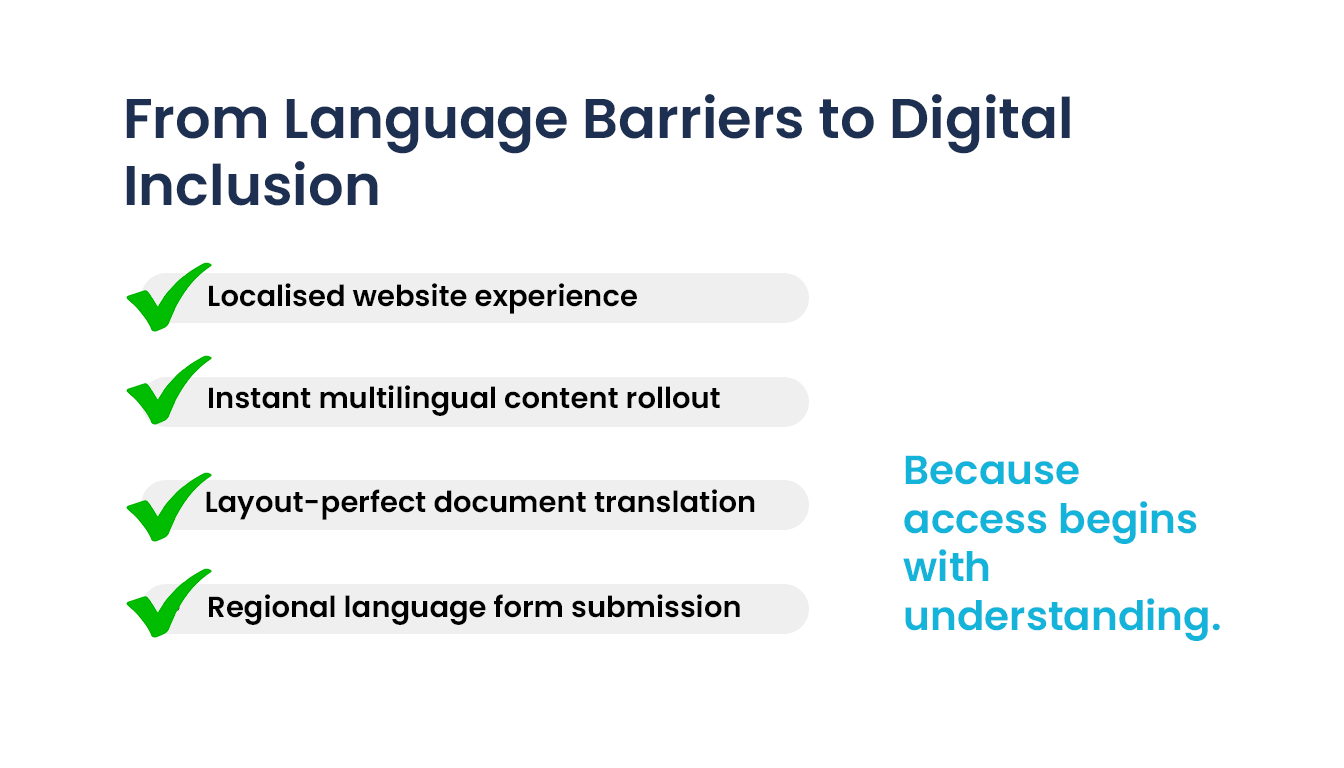
1. Websites in the Languages of the Region
We used website translation API, a plug-n-play solution to translate all of the main elements of our website into eight Indian languages. This included items such as service descriptions and navigation menus. At the top of the website, a language picker lets visitors choose their preferred language. AI can ensure translations look natural by not checking them.
2. Publishing faster with API integration
We linked our Translation API directly to the department's content management system. That lets them add new content in all languages in only one day. The manual work was reduced from days to minutes using the plugin.
3. DTP translation that kept the style and feel
We made it easy for them to make their static materials, such brochures, posters, and infographics, more useful by using Unicode fonts and layouts that could change.
4. Forms that are simple for everyone
We adjusted the input parameters so that they will work with regional scripts. That alone made a big difference for those who used to need help but could now fill out papers on their own.
Key Features of the Solution
- A translation mechanism that uses both AI speed and human quality.
- The CMS is closely connected to real-time language modifications.
- DTP files that are fully globalized without losing any design.
- Better navigation with a user experience in their language.
- SEO-friendly metadata is translated to help regional search engines.
The Results
What changed after the rollout? A lot. Here's a breakdown of the impact:
- Visits from Tier 2 and Tier 3 cities rose from 18% to 42%.
- Basic customer service requests dropped by 29%.
- Online form submissions more than doubled, from 1,900 to 4,300 monthly.
- The time to publish updates went from up to 5 days to less than 24 hours.
These reflected real improvements in how people interacted with the platform. More users could access information in their language. Fewer needed help navigating the site. And the internal team saved hours every week on content updates. By localizing their website and documents, the department opened digital doors to millions of previously left-out citizens.