6 Shifts We Witnessed After Making Document Translation Work for a Lending Powerhouse
We teamed up with a highly respected financial services company that has a massive presence in both urban and rural areas - they've got offices all over the place. They're dealing with thousands of retail loan cases every month, and that means they've got a never-ending pile of paperwork to get through - things like loan agreements, mortgage deeds, sanction letters, compliance circulars and updates for investors. Given that they're bound by RBI guidelines and have to deal with all sorts of clients, getting every word exactly right was a huge priority for them.
Challenge
It looked like a classic volume issue at first glance - too many documents, too many languages to worry about. But once we dug a bit deeper, it turned out there were really just a few key issues at play.
First, compliance was fragile. Terms like 'moratorium', 'foreclosure charges', and 'NPA' had to mean the same thing in Tamil, Marathi, and Gujarati. Any drift could raise a regulatory eyebrow.
Second, time was killing them. Sanction notes were taking almost a week to be translated. That slowed loan disbursals and frustrated customers.
And third, borrowers themselves were uneasy. Many of them didn’t want to sign English-heavy contracts. They needed the comfort of native-language paperwork before committing.
So, it wasn’t just translation. It was a problem of trust, compliance, and speed, all tied together.
Solution
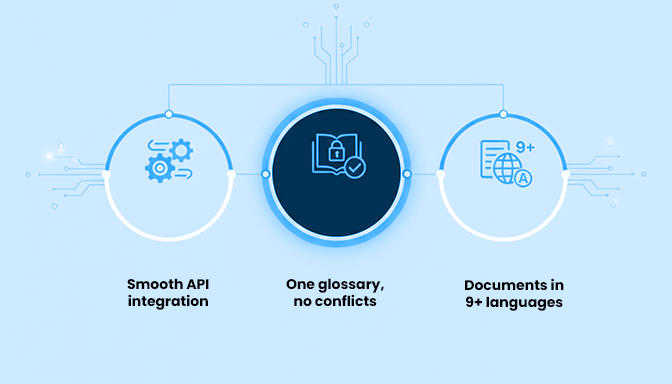
We didn’t reinvent their system. Instead, we plugged into it. Our API was directly connected to their document management flow, so the moment a note or circular was generated, it automatically entered our translation stream.
To prevent confusion in wording, we collaborated with their compliance team and developed a comprehensive financial glossary. NAV, redemption, and maturity value were all the same and used everywhere.
AI did the first pass to save time. But human linguists with domain experience were always going over files that needed a lot of compliance, like loan deeds. This combination made it possible for papers to move faster without losing their crispness.
There were also tests for consistency, such that branches in different states didn't use different wording for the same phrase.
Key Highlights
Impact
The difference showed up fast:
What really changed wasn’t just faster translations. It was how translation stopped being a bottleneck and quietly became part of their compliance and customer trust strategy.