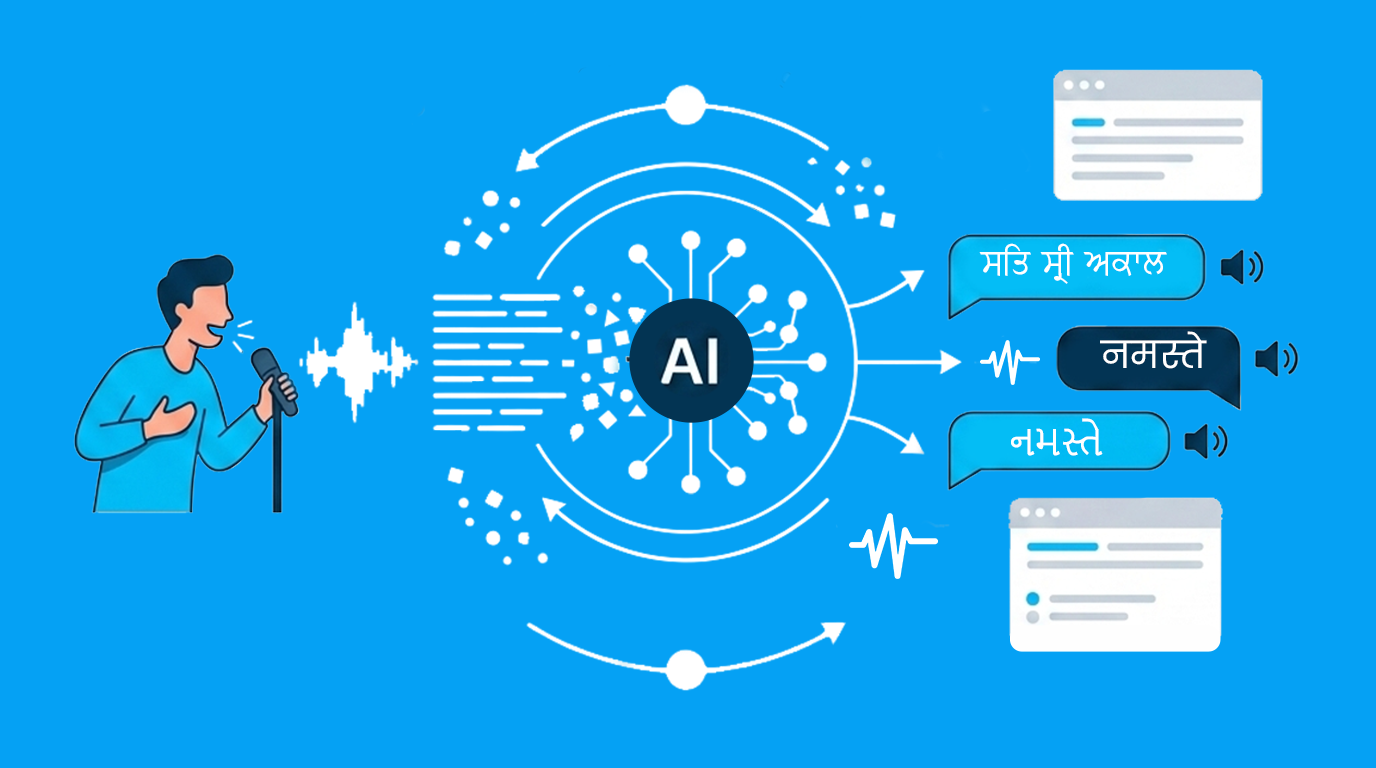
Multilingual Speech AI has moved from experimental labs into the core of enterprise workflows. It powers contact centers, field operations, accessibility layers, vernacular content creation, and human–machine interfaces across geographies. At its foundation sit 2 capabilities, Automatic Speech Recognition (ASR) or speech to text, and text to speech or voice generators, working together to convert voice into data and data back into natural speech.
For CXOs, this is no longer a technology conversation. It is an operating model decision.
Organizations that deploy speech systems in multiple languages are seeing faster customer resolution, higher digital adoption in non-English markets, and new data streams from previously “silent” interactions. Yet accuracy gaps, real-world acoustic complexity, and voice naturalness still limit full-scale impact.
The strategic question is not whether to adopt multilingual speech AI.
It is about deploying it in a way that matches real human conversations, not lab conditions.
What Is Multilingual Speech AI?
Multilingual Speech AI allows machines to:
1. Listen → Convert spoken language into text using Automatic Speech Recognition
2. Understand → Process meaning through language models
3. Respond → Convert text into natural audio using text to speech
4. Sound human → Use a voice generator to produce expressive speech in different languages
In business terms: it converts conversations into structured, usable intelligence.
How is Multilingual Speech AI useful in India?
Voice is the most natural interface ever created. But it is also the most complex.
In multilingual markets like India, Southeast Asia, and Africa, speech varies by:
- Accent
- Code-mixing
- Environmental noise
- Cultural context
That makes English-first models structurally insufficient.
According to the World Economic Forum, digital voice interfaces are becoming a primary gateway to services for the next billion users (Source). This shift is not about convenience, it is about inclusion and market access.
At the same time, enterprises are under pressure to:
- Reduce cost-to-serve
- Improve customer experience
- Expand into tier-2 and tier-3 markets
- Automate voice-heavy workflows
Speech AI sits at the intersection of all four.
How does Multilingual Speech AI Work?
A useful way to understand the architecture is through a modified Deloitte Tech Trends stack:
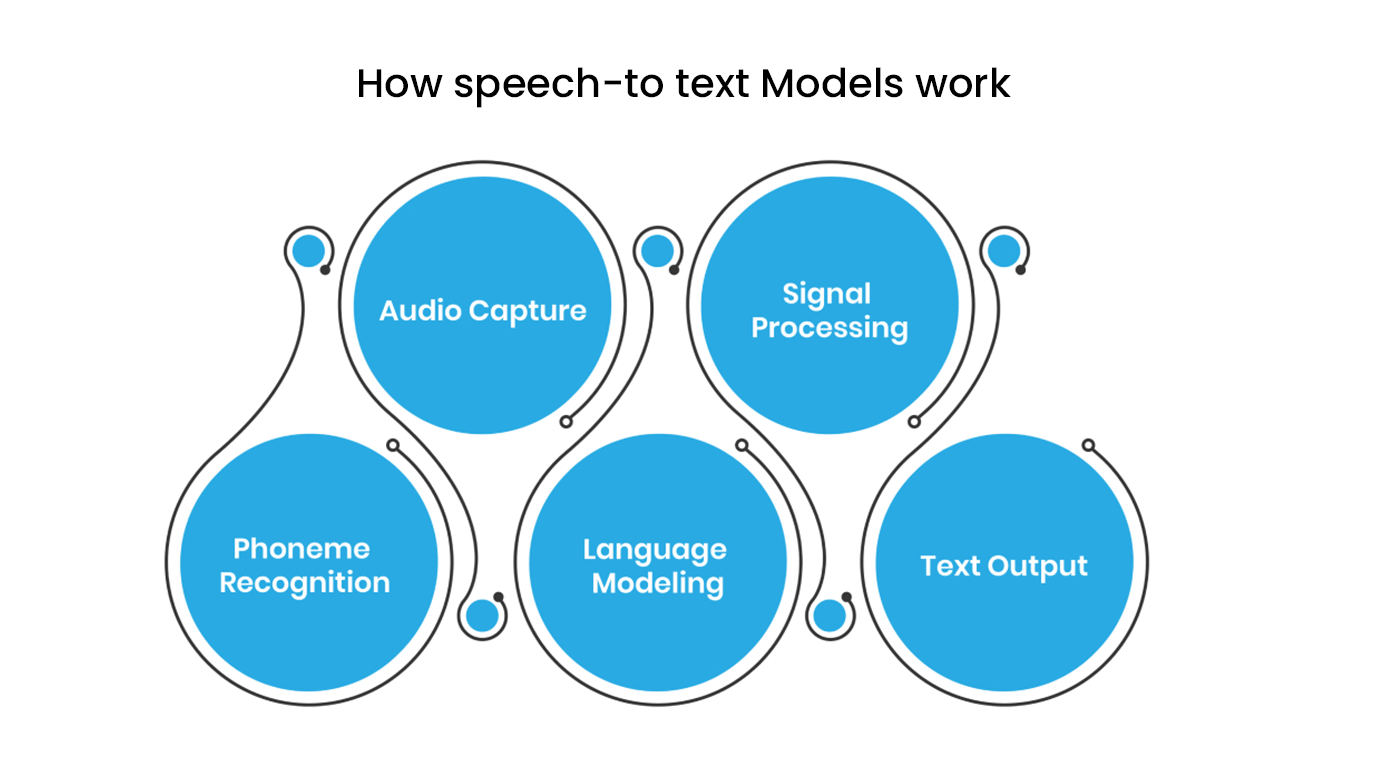
1. Input Layer – Speech to Text
Audio → cleaned → segmented → transcribed.
Challenges:
- Background noise
- Multiple speakers
- Dialects
- Real-time latency
2. Intelligence Layer – Language Processing
This layer detects:
- Intent
- Sentiment
- Context
- Entity extraction
In multilingual environments, this also includes code-switching.
3. Output Layer – Text to Speech & Voice Generator
Text is converted into:
- Natural prosody
- Language-appropriate pronunciation
- Emotionally aligned delivery
This is where user experience is won or lost.
Why Enterprises Are Investing in Multilingual Speech AI?
McKinsey notes that AI-driven automation can improve productivity in customer operations by up to 40% (Source). Voice is the largest unstructured component of those operations.
Speech systems unlock:
- 100% conversation analytics
- Real-time agent assistance
- Voice-based self-service
- Vernacular digital onboarding
In markets where typing is a barrier, speech becomes the primary interface.
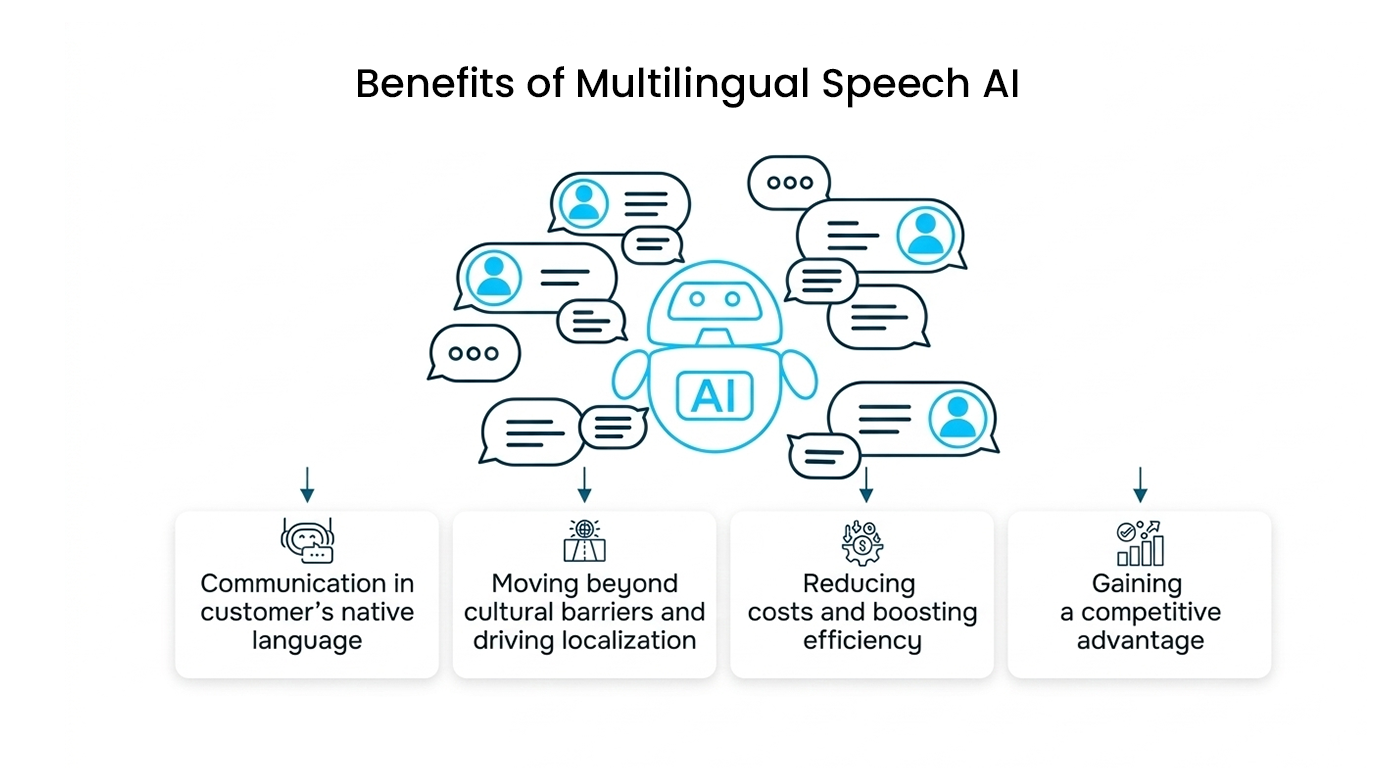
Benefits Across the Value Chain
Customer Experience
- Customers speak in their preferred language.
- Resolution time drops. Satisfaction rises.
Revenue Growth
- Voice commerce, vernacular discovery, and audio content creation open new channels.
Operational Intelligence
- Every call becomes a dataset.
Inclusion & Accessibility
- Speech removes literacy and interface barriers.
Real Challenges of Multilingual Speech AI
This is where the tone in the room usually changes.
1. Accuracy drops the moment you leave the demo
In a controlled setup, everything looks great.
But real conversations are messy, people talk over each other, switch languages mid-sentence, sit in noisy environments, or deal with weak networks. That’s where performance starts slipping.
2. Language coverage isn’t equal (especially in India)
Most models are still built on English-heavy datasets.
So when you move into Hindi, Tamil, Bengali, or mixed-language conversations, things aren’t as reliable. It’s not impossible to fix, but it’s definitely not plug-and-play.
3. Voice still feels… slightly off
Something still feels off, even when the pronunciation is right.
Real communication isn't only words; it's also pauses, stress, tone, and even where you come from. That layer is still hard to get right.
4. Small delays seem enormous while you're talking
Latency doesn't seem like a big deal on paper. But even a slight delay on a live call might make things feel wrong or uncomfortable.
5. Integration is where things actually break
This is the part most teams underestimate.
If it doesn’t plug cleanly into your CRM, contact center, or workflows, it doesn’t matter how good the AI is. It just sits there as a demo instead of becoming part of operations.
Gartner emphasizes that AI initiatives fail not because of models, but because of integration and operating model gaps .
Development Journey: From Pilot to Platform
It usually starts small. A single use case, in one language, solving one clear problem. Then it expands, more languages, more customer segments, with ASR and TTS layered in to handle real-world diversity.
As things mature, speech stops being just an input layer. It begins to drive real-time intelligence, helping agents during calls, translating conversations in real time, and even flagging compliance risks as they happen.
And eventually, it fades into the background. Voice is no longer a feature you point to. It becomes part of the infrastructure, quietly embedded across products, workflows, and everyday operations.
This is where it stops being a feature and becomes a capability.
How Devnagri helps you to communicate with multilingual digital Bharat?
In India, multilingualism is not a feature, it is the default state.
Enterprises need systems that:
- Handle code-mixed speech
- Work in low-bandwidth environments
- Scale across dozens of languages
This is where platforms like Devnagri become strategically relevant, not as a vendor, but as a language infrastructure designed for Indian linguistic diversity, localization automation, and population-scale deployment.
The shift is subtle but important:
from “translation” to “language AI as an operating layer.”
Got it. Full sentences, natural flow, no “AI rhythm,” and still human.
Opportunities vs. Risks
Opportunities
Voice is slowly making it possible for more people to use digital systems, especially those who find it easier to talk than type or figure out complicated interfaces. It is also converting everyday interactions into a useful layer of knowledge, as discussions show intent, friction, and behavior that organized data typically overlooks. There are also early hints of audio-led trips, where users can finish activities without using screens. This change also makes things more accessible by making interaction easier and more open, without requiring separate solutions.
Risks
Many implementations still depend a lot on English-trained systems, which might cause problems when real users switch languages or only use regional ones. Integration is another area where assumptions and reality don't match up. Connecting speech systems to current workflows and platforms often takes more work than expected. Even when the technology works, speech output can sound a little off because of differences in tone and culture, which makes users less likely to trust it. Also, it's not always apparent who owns what in a company, and when several teams are working on the same thing but aren't on the same page, development tends to slow down or break up.
Conclusion
Multilingual Speech AI is not about teaching machines to talk.
It is about allowing businesses to finally listen, to every customer, in every language, at scale.
The organizations that understand this will redesign their workflows around voice.
The rest will continue optimizing text in a voice-first world.
“In the next decade, competitive advantage will belong to the enterprises that can hear their markets, not just measure them.”