Multilingual speech AI in India has become an operating support system, either a constraint or a competitive advantage, depending on how early leaders act.
Speech has always been the most natural human interface. What changed is not human behavior, but machine readiness. By 2026, multilingual speech AI has crossed a threshold where it is no longer experimental, no longer cosmetic, and no longer safely ignored.
What is multilingual speech AI?
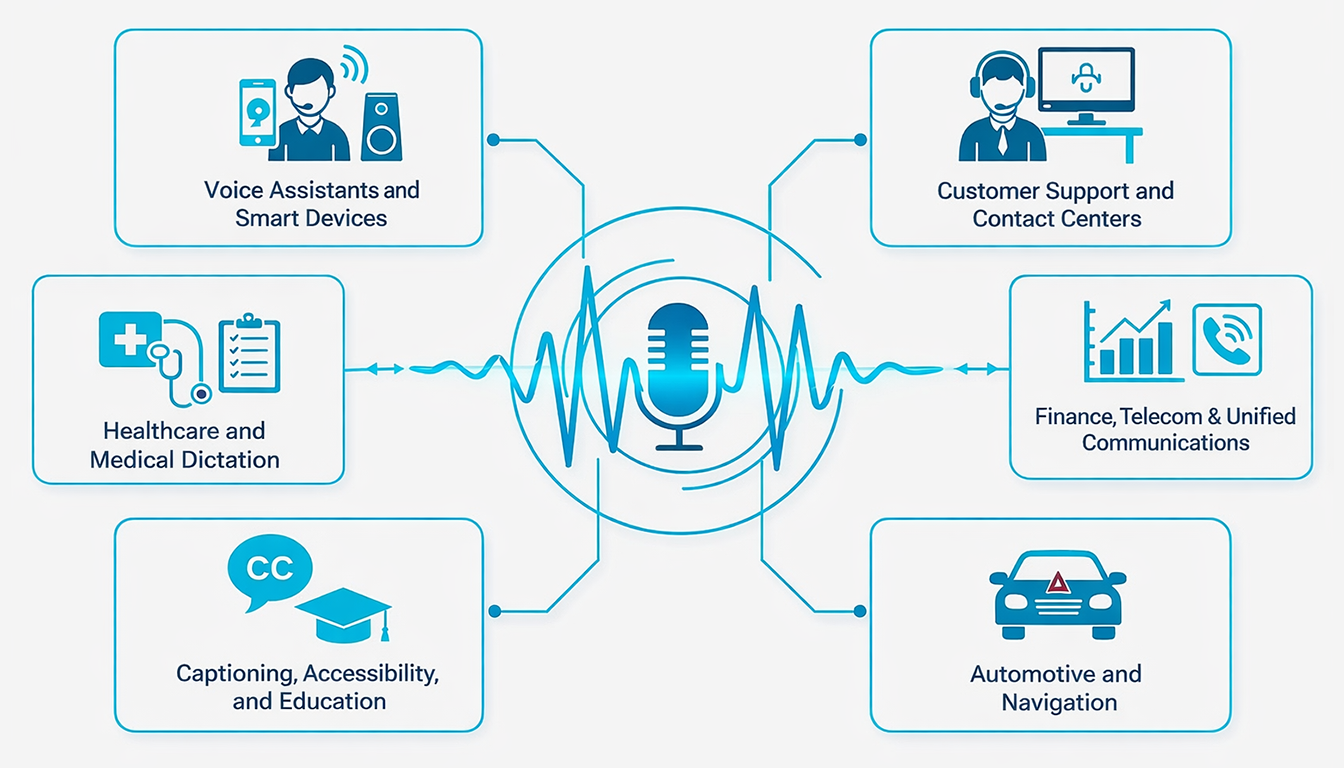
Enterprise speech AI enables machines to listen to and understand human speech, and to respond in a natural way. It turns voice into text, text into voice, and even translates between languages in real time. That’s what makes voice assistants, smart call bots, and voice-enabled apps feel conversational instead of robotic.
Speech to text AI, or automatic speech recognition (ASR), and text to speech AI in India are now reliable enough to operate at enterprise scale. But reliability also raises the stakes. Once speech systems enter core workflows, they are scrutinized as rigorously as financial or data infrastructure.
Why is multilingual speech AI important?
Across industries, executives are confronting the uncomfortable truth that systems designed for English-first, text-heavy interaction do not scale into the next phase of growth. Whether the goal is to expand into new regions, reduce service costs, or meet regulatory expectations, language has become a structural bottleneck.
This blog looks at five real-world use cases of multilingual speech AI for Indian enterprises that are actively deploying in 2026, not from a lab or vendor lens, but from what actually scales, breaks, and creates leverage inside organizations. In a country as linguistically complex as India, the lesson is clear: Multilingual Digital Bharat is not theoretical. And no one understands the multilingual Bharat better than those building for it from the ground up.
How does Multilingual speech AI help business expansion?
For years, speech AI lived in innovation labs. It impressed in demos, struggled in production, and quietly slipped off executive agendas.
That has changed not because of a single breakthrough, but because three realities have converged.
Growth is no longer linguistically uniform.
The next wave of users, across banking, public services, healthcare, and commerce, does not feel comfortable with English-only systems. Language is no longer a localization task; it is a market access decision.
Human-led language operations don’t scale.
Indian call centers need multilingual voice AI, manual transcription, and training that is customized to each location. These things all add to costs, make things less reliable, and slow things down. Leaders have to look at where language is causing problems they can no longer afford due to margin pressure.
Regulators now care about comprehension, not intent.
Providing information is no longer enough. Organizations must increasingly demonstrate that they understand the information.
Speech AI now sits at the intersection of growth, cost, and compliance, which is why it has moved from the edge to the center.
Best 5 Multilingual AI Voice Generator Use Cases for Enterprises in 2026
In 2026, speech AI that understands multiple languages is a popular business tool. Businesses are using it for real-time customer service, voice-based insights, virtual assistants, automatic call documentation, and hands-free workflows for teams on the front lines. This is all made possible by automatic speech recognition (ASR). In short, it helps firms talk to more customers in more languages.
Use Case 1: Accurately capture speech with ASR and turn it into usable text in noisy environments.
The first enterprise-grade use case in a multilingual ecosystem like India is deceptively simple, reliably capturing speech everywhere it occurs.
In 2026, accuracy is assumed. What matters is performance under real conditions:
- Noisy environments
- Regional accents and dialects
- Code-mixed speech
- Emotional or high-stakes conversations
- Regulatory scrutiny
Many enterprises discover, too late, that a model that scores well in benchmarks can fail badly in production. When it does, the cost is not technical. It is reputational, legal, and operational.
This is why enterprises are quietly shifting away from generic speech APIs toward systems trained on real Indian speech, across regions and contexts. Reliability, not novelty, is the foundation use case.
Use Case 2: Industry-Specific Speech to text AI for Operations
The second use case is where speech AI starts delivering operational leverage.
- General-purpose models promised scale. They delivered inconsistent results in practice. Businesses are using domain-adapted multilingual voice AI India in 2026, even if they don't call it that.
- In financial services, speech to text AI quietly does the heavy lifting—listening to calls to determine whether the mandatory disclosures were actually read out, checking that the customer’s consent is on record, and flagging complaints the moment they surface, rather than days later.
- Code-mixed speech
- In healthcare, it shows up in a different way: turning fast, often messy conversations between doctors and patients into clear, dependable notes so there’s a record you can trust without asking clinicians to spend their evenings typing.
- Dialect coverage and intelligibility are given precedence over global averages in government deployments.
The insight is straightforward: language is never neutral. It has legal, cultural, and emotional significance. Speech AI that ignores this context may work, but it will not scale responsibly.
Use Case 3: Multilingual text to speech AI for speech AI for compliance and governance in India
One of the most underestimated enterprise use cases is compliance.
Language initiatives were once justified on the basis of experience. In 2026, they are warranted due to risk.
- Customers need explanations in a language they can understand.
- There must be a written record of consent, and it must be checked.
- People often dispute what was said, how it was said, and the words used.
In markets with many languages, like India, multilingual speech AI has become a useful tool for compliance. Platforms made for Multilingual Digital Bharat put more value on auditability, consistency, and large-scale localization than on voice as a new feature.
In theory, black-box global speech APIs should work well, but they leave gaps in explainability just when people start paying more attention.
Use Case 4: Speech AI for decision support
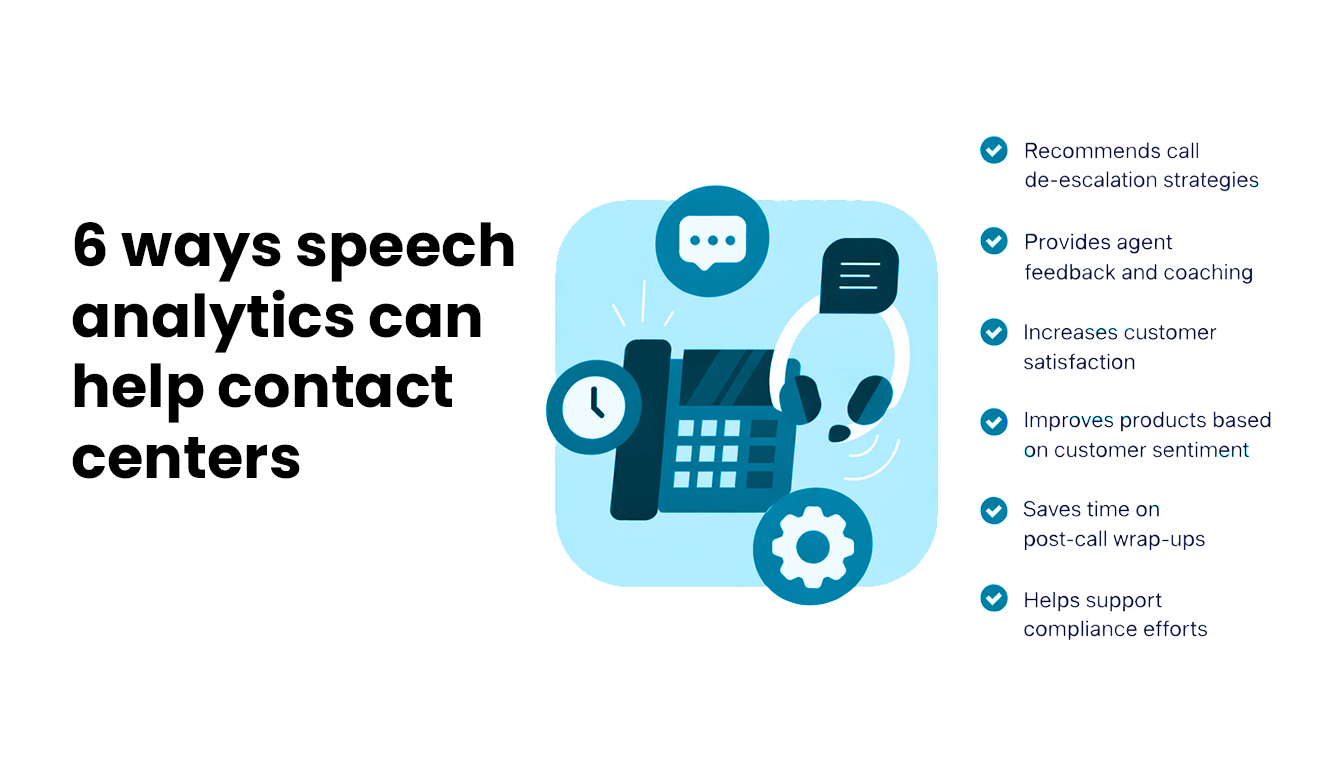
By 2026, voice AI will be used for more than only transcription and playback. Companies are putting in place voice systems that:
- Translating speech into structured intelligence in real time
- Indian language speech recognition for feelings, friction, and intent
- Routing workflows and setting priorities for actions
- This means that the system is moving from automation to decision support.
Speech becomes an intelligence layer, not one that substitutes judgment, but one that surfaces context previously undetectable at scale. It's subtle. It is also potent.
Use Case 5: Affordable Language Expansion for Enterprises
For years, multilingual expansion followed a simple equation: more languages meant higher costs.
That equation is breaking.
Cross-lingual learning, shared acoustic models, and efficient text to speech AI pipelines are reducing the marginal cost of adding languages. The first few languages remain expensive. The next ten are not.
Language is shifting from constraint to lever. Enterprises that recognize this early expand faster and more cheaply than those that do not.
Opportunities businesses often overlook
The upside
- Quicker entry into new markets without rebuilding the entire customer journey
- Trust that comes naturally when people can interact in their own language
- A more resilient compliance framework because conversations are clearer, traceable, and consistent
The hidden risks
- Positioning speech AI as a surface feature instead of a core operational layer
- Missing the bias that shows up across languages, dialects, and accents
- Scaling too fast before defining ownership, accountability, and governance
In this context, Devnagri Speech AI stands out not as a feature-led platform, but as a language infrastructure built for India’s realities. Designed from the ground up for Multilingual Digital Bharat, Devnagri’s speech systems are trained on real, regionally diverse Indian speech, across accents, dialects, and code-mixed conversations that global models often miss.
The focus is not just on transcription or playback, but also on reliability, auditability, and scalability across regulated, high-stakes environments generated from speech AI challenges in India. This is where the difference becomes clear: no one understands the multilingual Bharat better than Devnagri, because the systems are built around how India actually speaks, not how benchmarks assume it does.
Closing Reflection
Multilingual speech AI is often framed as a technology problem. In reality, it is a leadership problem.
The organizations that succeed will not be those with the most advanced models, but those that understand how language shapes trust, comprehension, and accountability at scale.