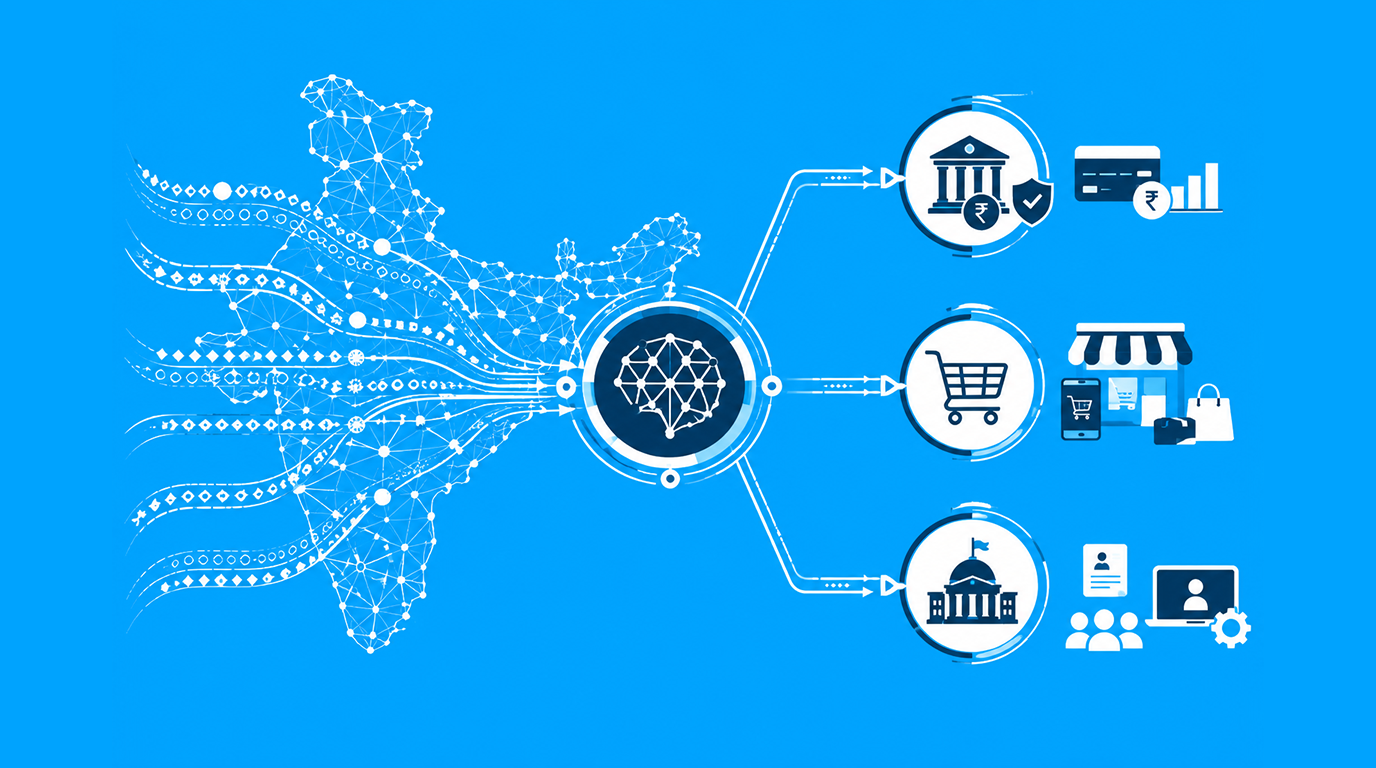
For much of the past decade, language technology occupied a relatively predictable position within enterprise transformation programs. It was associated with localization, customer engagement, and, occasionally, operational efficiency. The underlying assumption was simple: language existed at the edge of the business, primarily affecting how information was presented rather than how the organization itself functioned.
Artificial intelligence has quietly changed that assumption.
As AI systems become embedded in onboarding journeys, customer support workflows, compliance communication, policy servicing, collections, and internal operations, language is no longer acting merely as a communication layer. It is increasingly influencing how information is interpreted, delivered, and acted upon. In many organizations, this shift has happened gradually enough to avoid attention. Yet it may be one of the more consequential developments in enterprise AI adoption over the next few years.
The discussion around sovereign language AI emerges from this context. While the term itself is relatively new, the underlying business challenge is not. Organizations have always sought greater control over critical infrastructure. What is changing is the recognition that language systems are beginning to resemble infrastructure in ways they did not before.
What Is Sovereign Language AI?
Sovereign language AI is not about national pride. It is about who controls the language decisions an enterprise makes inside its own workflows, and whether those decisions hold up under audit.
People confuse the term with data residency a lot. That's only part of it. The harder question is who decides how a sentence gets converted, why it was converted that way, and whether anyone can trace that decision six months later when a regulator asks.
A translation API does one thing well: it converts text. Sovereign language AI does something different. It sits inside the actual workflow — say a KYC onboarding flow or a grievance ticket — and applies the enterprise's own rules to that conversion. It also keeps a record. Every step, traceable.
That matters more in regulated sectors than almost anywhere else. A BFSI team working under the RBI KFS mandate, or a government body answerable to the DPDP Act, cannot afford a language layer that behaves like a black box. They need deployment choices too: SaaS, VPC, on-premise, depending on what their compliance posture demands.
So sovereignty, in this context, has very little to do with where a server sits. It is all about accountability.
The Real Challenge Is Not Translation
Many conversations about multilingual AI continue to start with translation. That is understandable, but it may also be limiting.
Large enterprises rarely struggle because they lack the ability to translate content. The market offers numerous tools capable of converting text from one language to another. The more difficult challenge appears when language becomes part of a regulated process rather than a standalone communication exercise.
A banking institution explaining lending terms across multiple states faces a different problem than a company translating marketing copy. An insurer communicating policy obligations in several languages is dealing with different risks than an e-commerce platform localizing product descriptions. In these environments, the concern is not simply whether people understand the language. The concern is whether meaning remains consistent as information moves across channels, departments, and customer touchpoints.
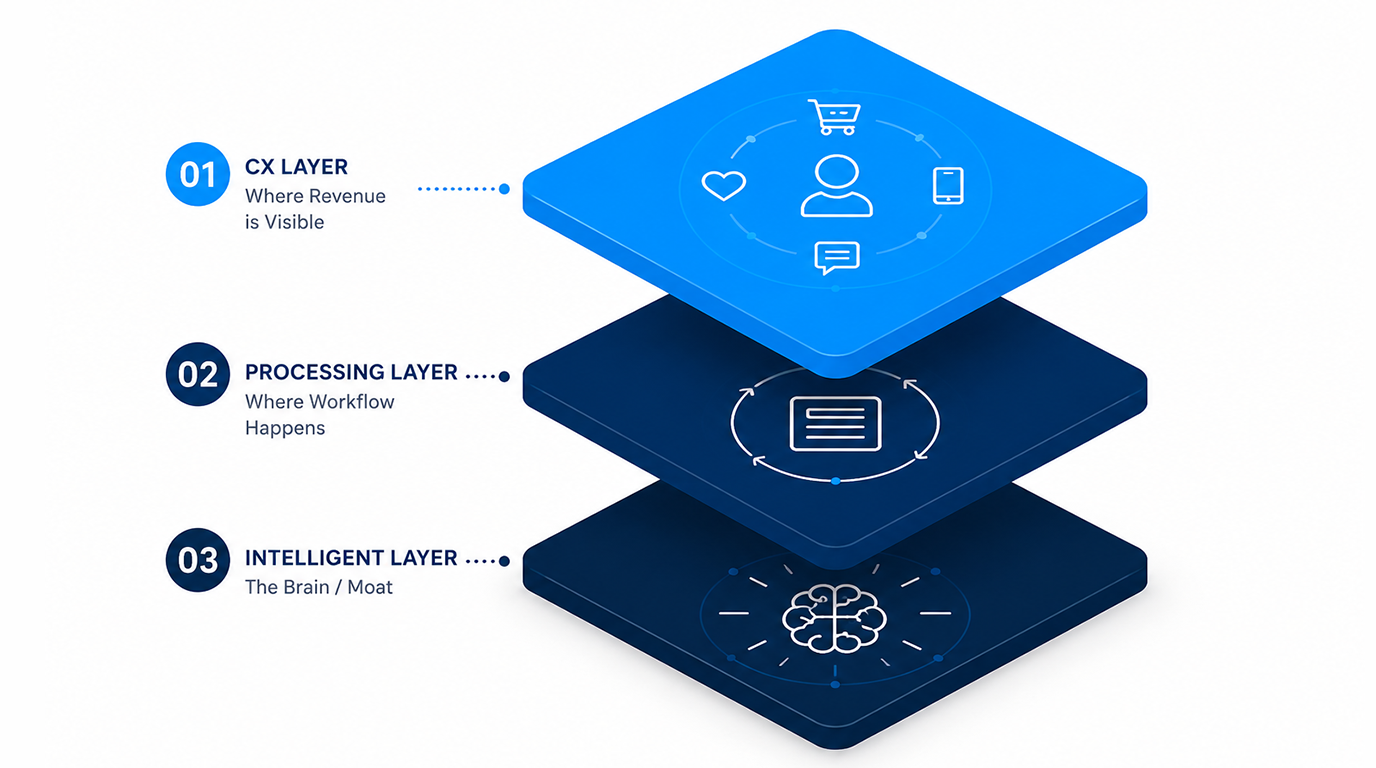
This distinction often becomes visible only at scale. A translated sentence can be reviewed. Millions of customer interactions generated, summarized, interpreted, or supported by AI require a different level of governance altogether.
For many enterprises, the challenge is no longer linguistic. It is operational.
Why Language Is Moving Closer to the Risk Function
One of the more interesting shifts occurring inside large organizations is the growing involvement of compliance, governance, and risk teams in conversations that were once dominated by customer experience functions.
Five years ago, we would likely have evaluated a language technology initiative according to engagement metrics, accessibility goals, or service quality improvements. Today, similar discussions frequently include questions about auditability, deployment architecture, data handling practices, and regulatory accountability.
This evolution reflects a broader reality of enterprise AI adoption. Once automated systems begin participating in customer interactions, organizations become responsible not only for what those systems say but also for how they arrive at those outcomes.
Language therefore becomes a governance issue.
A disclosure communicated inconsistently across languages can create exposure. A customer interaction that cannot be traced may raise questions during an audit. A workflow that relies on fragmented language systems can introduce operational uncertainty that is difficult to detect until a problem emerges.
The significance of these risks varies by industry, but the direction appears increasingly consistent. Language operations are moving closer to enterprise governance frameworks.
The Limits of General-Purpose Intelligence
There is a tendency within technology markets to assume that larger and more capable AI models will eventually solve most enterprise requirements. In practice, organizations are discovering that capability and suitability are not always the same thing.
General-purpose models excel precisely because they can operate across an extraordinary range of subjects and use cases. However, enterprise environments are often defined by specificity. Industry terminology, internal processes, regulatory obligations, and customer expectations create operating conditions that differ substantially from the broader environments on which many models are trained.
The issue is not performance in the conventional sense. Rather, it is alignment.
An enterprise does not necessarily require a model that knows everything. It requires a model that understands the context in which the business operates.
This explains the growing interest in domain-oriented language intelligence. Financial institutions, healthcare organizations, insurers, and public-sector entities increasingly require systems capable of operating within clearly defined boundaries while understanding the language, workflows, and obligations unique to their sectors.
In many respects, the market appears to be moving away from a pursuit of universal intelligence and toward a pursuit of relevant intelligence.
From Tools to Infrastructure
A useful way to understand current market developments is to examine how organizations are changing their view of language technology itself.
Historically, enterprises purchased language capabilities as individual tools. Translation systems, speech technologies, voice interfaces, and conversational platforms were often evaluated independently. Each solved a specific requirement, and in many cases that approach was entirely reasonable.
The challenge emerges as AI adoption expands.
Multiple systems begin interacting with the same customers. Different business units establish separate workflows. Language assets become distributed across platforms. Governance becomes fragmented. Over time, organizations discover that they are managing a collection of capabilities rather than a coherent operating environment.
This is why the concept of language infrastructure is attracting attention.
Infrastructure implies consistency. It implies governance. It implies standards, oversight, monitoring, and integration. Most importantly, it implies that language is being treated as a strategic capability rather than a collection of isolated features.
The distinction may appear subtle. In practice, it can significantly influence how organizations scale AI across the enterprise.
Why This Matters Particularly in India
India's enterprise landscape presents a combination of characteristics that is difficult to find elsewhere at comparable scale. Rapid digital adoption and considerable linguistic variety. Digital transformation plans are ambitious and live alongside heavily regulated sectors. Organisations are moving into more and more diverse markets and customers expect more and more.
In this context, language often becomes a crossroad of progress and governance.
Companies that want to expand beyond big cities often learn that simply being reachable isn't enough. Customers are looking for clarity, confidence and consistency in the language they want to employ. At the same time, organizations must maintain operational discipline across large and complex ecosystems.
These pressures are creating demand for language capabilities that extend well beyond conventional localization.
The organizations that appear best positioned for the next phase of AI adoption are not necessarily those deploying the largest models. They are frequently laying down the strongest foundations around governance, infrastructure and operational control.
Looking Beyond the Current AI Cycle
Technology markets tend to focus heavily on immediate breakthroughs. Yet many of the most important shifts become visible only after the initial excitement subsides.
The current conversation around sovereign language AI may ultimately be less about language and more about the broader maturation of enterprise AI. Organizations are beginning to move beyond experimentation and toward long-term operating models. In doing so, they are asking questions that rarely dominated earlier discussions: Who controls the system? How is it governed? Can it scale responsibly? Does it align with regulatory expectations? Can it support the realities of the markets in which the organization operates?
These questions do not generate headlines in the same way as model launches or benchmark results. They are, however, the questions that increasingly shape enterprise technology decisions.
For providers such as Devnagri AI, the opportunity lies within this transition. The market is gradually moving from isolated language tools toward platforms for enterprise language technology that combine multilingual intelligence, governance, deployment flexibility, and operational scalability. Whether described as sovereign language AI or by another term, the underlying direction appears increasingly clear.
The next chapter of enterprise AI is unlikely to be defined solely by what systems can generate. It will be defined by how effectively organizations can govern, operationalize, and trust those systems within the environments where business actually takes place.