Insurance customers rarely judge insurers by product brochures or policy wording. They judge them in moments of stress, after an accident, during a hospital admission, or while waiting for a claim update that feels overdue. In those moments, turnaround time (TAT) is not an operational metric. It is an experience.
Yet across the insurance industry, especially in document-heavy, multilingual markets, TAT remains stubbornly high. The root cause is rarely just underwriting complexity. It is document friction, scanned forms, handwritten reports, medical records, invoices, and declarations arriving as images, often in regional languages, and processed through manual or semi-manual workflows.
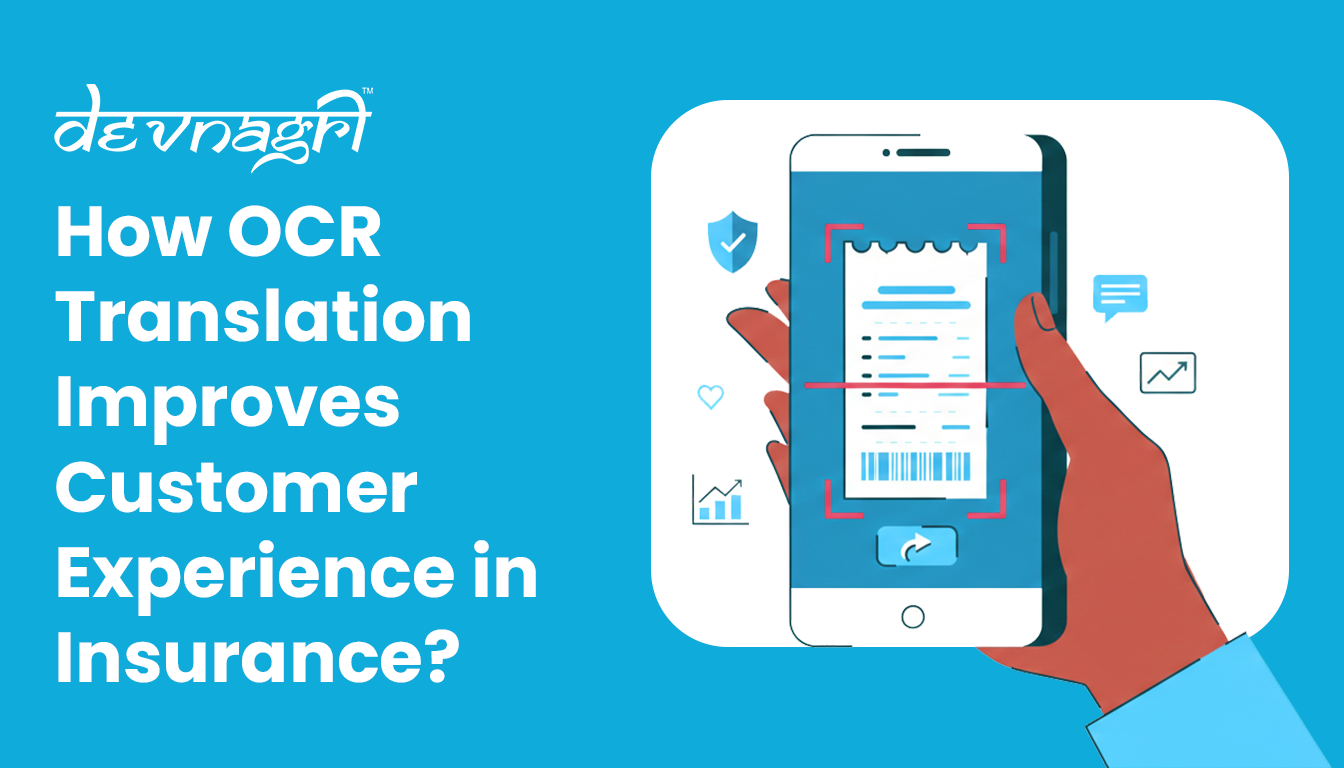
Optical character recognition (OCR) software, when combined with intelligent translation, changes the equation for online image-to-text converters. Not incrementally, but structurally. It converts images into usable data, enables faster, more consistent interpretation across languages, and creates transparency where opacity once reigned. More crucially, it lets insurance companies go from reacting to problems to talking to people before they happen.
This blog examines how OCR solution accelerates the process and enhances the customer experience (CX) in insurance. Let’s say you are processing any indian language, be it English to Telugu Translation you want to perform, then it does this by using real-world operational examples before and after the change, consulting frameworks, and practical lessons for BFSI leaders considering the technology.
Why is turnaround time still important for customer experience?
Insurance operations were built for paper. Even today, despite digital front ends, the core still runs on documents. Claims are supported by photographs. Health insurance relies on discharge summaries. Motor insurance depends on inspection reports. Affidavits and proof documents are part of the onboarding process for life insurance.
In countries with multiple languages, such as India, these papers are available in Hindi, Tamil, Marathi, Bengali, Telugu, and more. They are often scribbled or photographed with smartphones in less-than-perfect conditions. In the past, the operational response has always been the same:
- Reviewing documents by hand
- Transcribing important fields by hand
- Translation done by someone else or in-house
- Checking for faults again
Every step takes more time. Every time you hand off anything, you take on more risk.
Deloitte notes that insurers that rely heavily on manual document processing experience higher structural operating costs and slower service cycles, particularly in claims-intensive processes (Source).
What often goes unsaid is the CX impact. Customers are rarely told why something is delayed. They are only told that it is delayed.
What optical character recognition software Actually Changes in Insurance Workflows?
Image to text converter online, on its own, is not transformative. OCR recognition software combined with translation and workflow intelligence is.
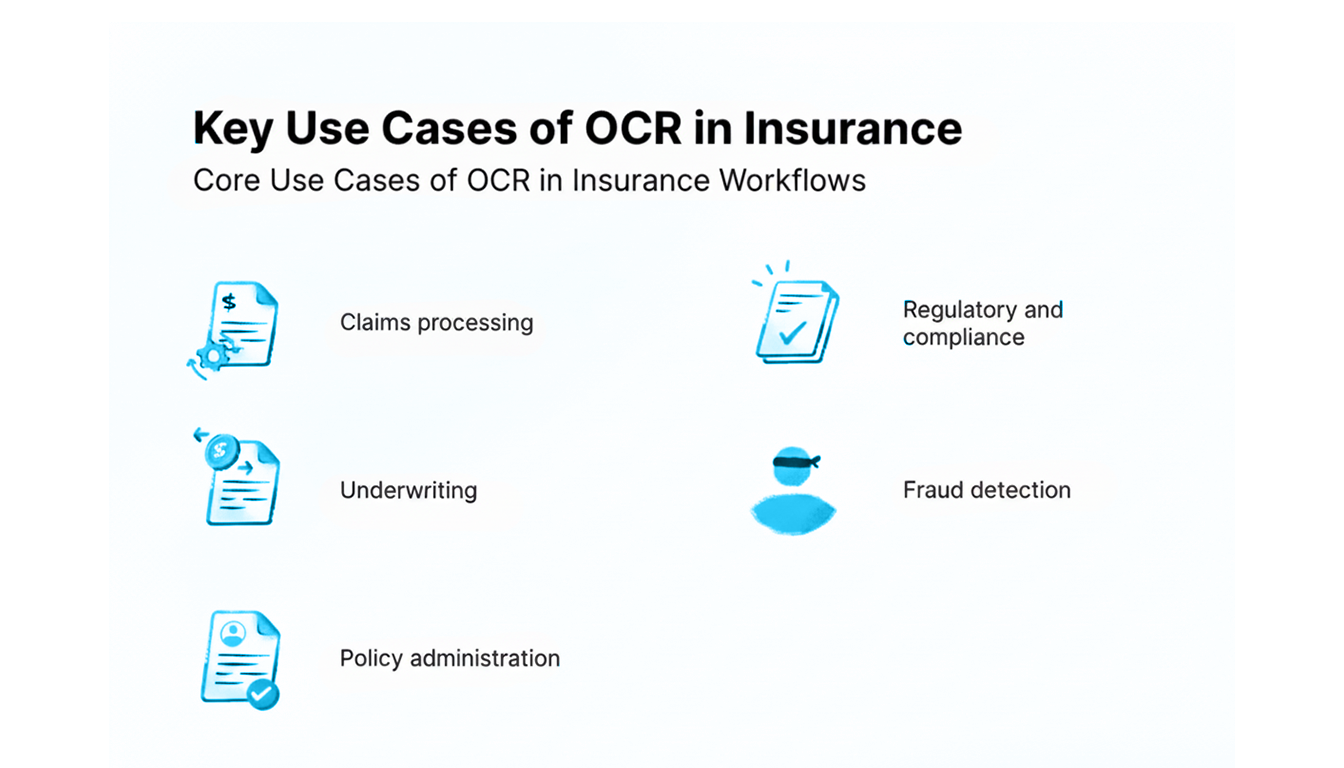
At a practical level, OCR translation does three things simultaneously:
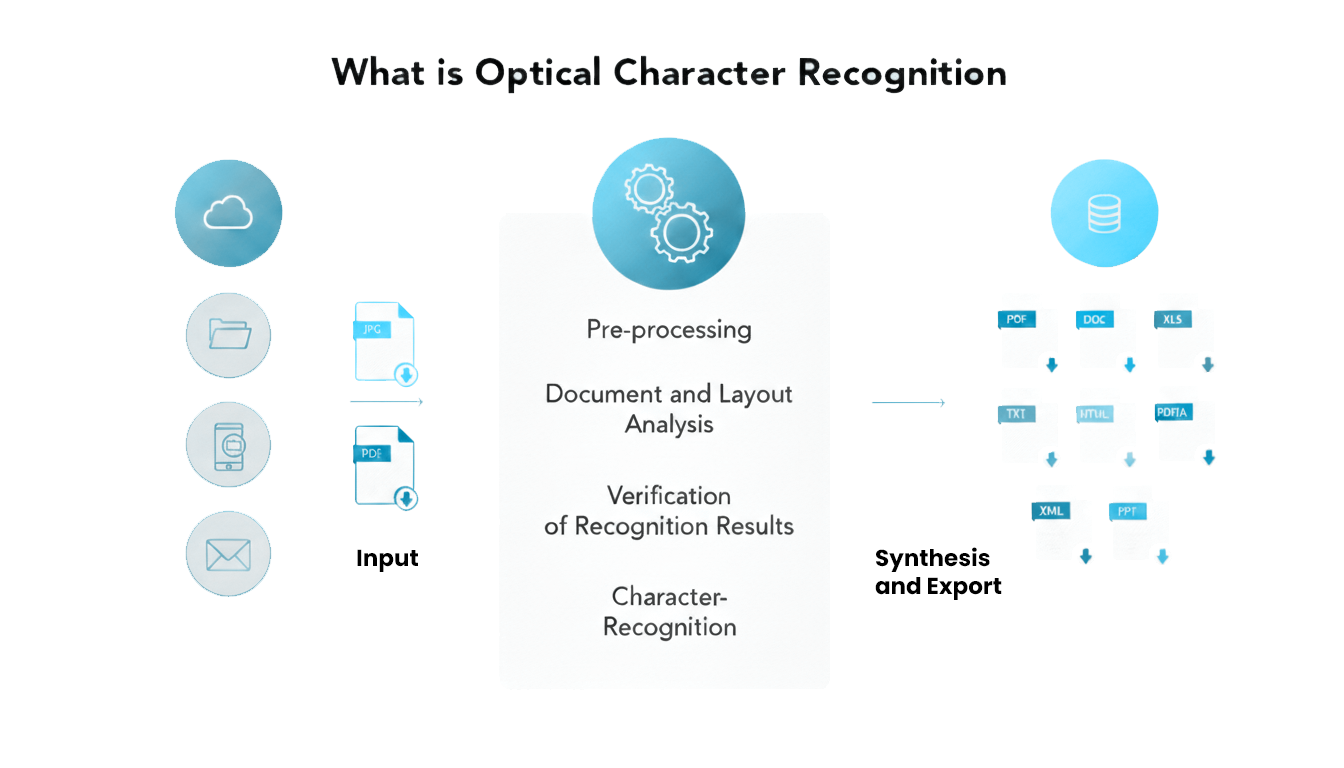
1. It converts images into searchable text
Scanned PDFs, photographs, and handwritten forms become machine-readable.
2. It normalizes language at scale
Regional-language inputs are translated into a common operational language without waiting for manual intervention.
3. It enables selective human review
Instead of reading everything, humans review only exceptions, ambiguities, or high-risk cases.
Leading companies have observed that intelligent document processing can reduce document-handling time by 30–60% when integrated into end-to-end financial workflows, particularly in claims and onboarding functions.
The deeper benefit is not speed alone. It is consistent. The same document is interpreted the same way, every time.
Before vs After: A Ground-Level Claims Example
Before OCR Translation
Consider a health insurance claim submitted with:
- Hospital bills
- A discharge summary in a regional language
- Diagnostic reports captured as mobile images
The typical flow looks like this:
- Operations staff manually review images
- Key details are transcribed into systems
- Documents are sent for translation
- Translated content is rechecked for accuracy
If any mismatch appears, dates, diagnosis terms, or treatment descriptions, the file loops back. Customers wait. Call centre volume rises. Trust quietly erodes.
After OCR Translation
With OCR recognition software in place:
- Images are passed through an image-to-text converter
- Text is automatically translated into the insurer’s working language
- Key entities such as dates, amounts, procedures, and exclusions are highlighted
- Human reviewers step in only where clarity is required
Turnaround time compresses. Customers get faster responses and clearer explanations, which is even more crucial. They feel kept up to date, even when things are delayed.
OCR Translation Through a Consulting Framework
Using a simplified Deloitte Tech Trends lens, OCR translation impacts insurance operations across three dimensions.
1. Efficiency
Manual transcription and first-pass translation are removed from the critical path. This shortens cycle times in claims, endorsements, and onboarding without increasing headcount.
2. Quality
Machine-assisted extraction reduces variation in interpretation. This is especially crucial in medical and legal terminology, where even tiny mistakes can cause big problems later on.
3. Openness
Once documents are digitized, insurance companies can keep track of how much time is spent, explain delays, and send clients more useful status updates instead of just generic ones.
Harvard Business Review has highlighted that transparency during service delays often matters more to customers than raw speed, especially in high-stakes services like insurance (Source).
Quantitative Impact: What Improves in Practice
OCR translation always makes three metrics better, even though the results depend on the insurer's age and type of business:
- Time to Complete: Usually cut by 25% to 50% in processes with a lot of documents
- Error Rates: Less rework because of standardized interpretation
Follow-ups with customers: Fewer "status check" calls and emails. Gartner has repeatedly said that intelligent document processing is a basic skill for improving customer service in BFSI, not just a specialist automation technology. (Source) .
What matters most is not the percentage reduction itself, but the operational predictability it creates.
Opportunities and Risks
Key Opportunities
Faster claim settlements without higher costs that are proportional
- Consistent handling of documents in more than one language
- Better audit trails and protection from the law
Risks
- When image quality is poor, OCR solution accuracy drops.
- Generic translation tools struggle to handle insurance terms.
- Disconnected tools make new kinds of silos.
Where Language AI Platforms Like Devnagri Fit?
Text recognition software alone quickly reaches its limits when insurance paperwork arrives in many languages and formats. This is where language AI platforms like Devnagri come in, but not in a loud way.
By using OCR solution results with translation and localization workflows that have been trained in the field, insurers can:
- Process a lot of documents in 22+ indian regional languages and 20+ international languages.
- Keep your communications with customers consistent.
- Less reliance on translation companies that don't work together
The value isn't flashy. It makes things run more smoothly, stops things from getting worse, and gives frontline teams more confidence.
Conclusion
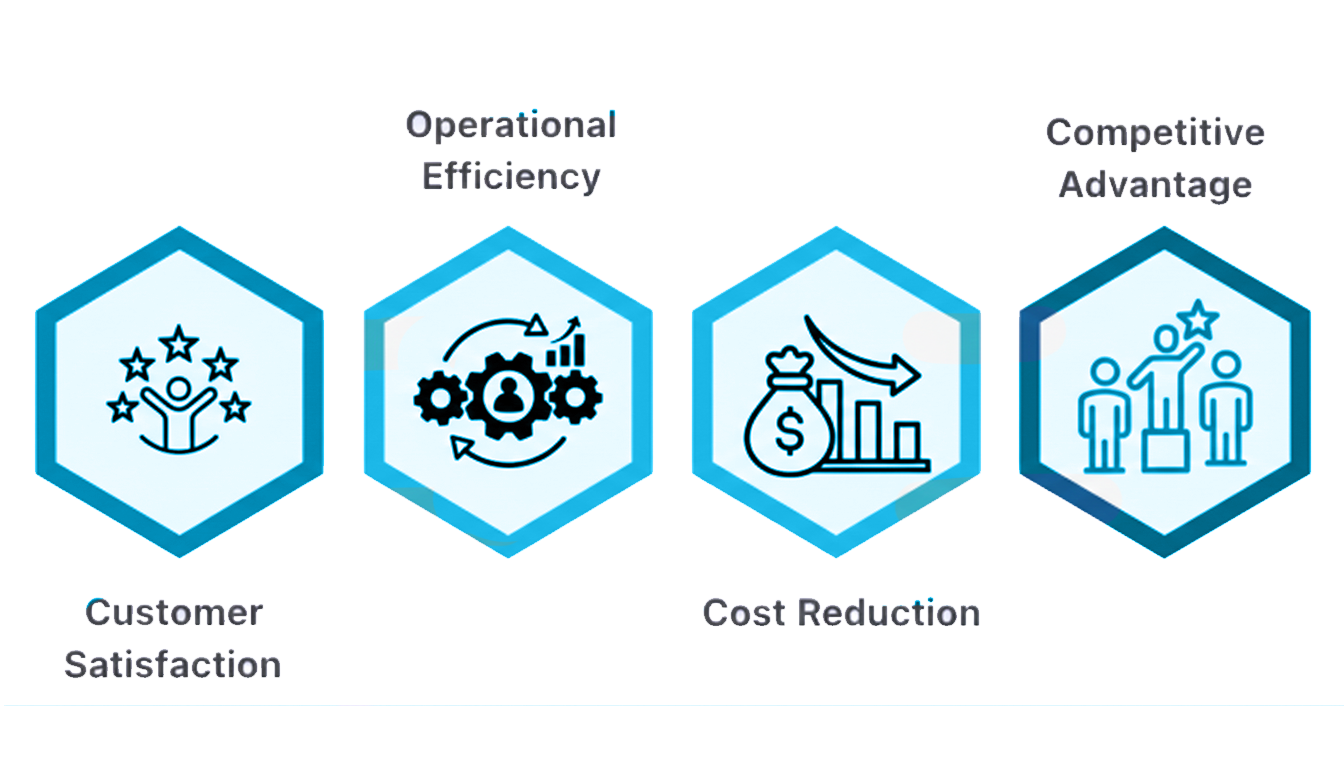
In insurance, speed is often mistaken for efficiency. In reality, speed is empathy. OCR translation shortens the distance between customer intent and insurer response. When implemented thoughtfully, it does more than reduce turnaround time, it changes how fair, responsive, and human an insurer feels.
As one operations leader observed after rollout:
“Customers didn’t say we became faster. They said we became clearer.”
That clarity is the real competitive advantage.