
India's BFSI sector has quietly entered a communication-heavy era. Every week brings new RBI circulars, revised disclosures, policy clarifications, customer notifications, fraud advisories, lending updates, and operational instructions. The volume itself is not the only challenge anymore. The real pressure comes from the speed at which institutions must process, approve, translate, distribute, and track this information across multiple channels and languages.
Yet inside many banks, NBFCs, insurance firms, and financial service organisations, regulatory communication still runs on fragmented workflows. Teams exchange PDFs over email threads. Approvals move through spreadsheets. Translation vendors work outside the core system. Someone manually copies final content into SMS panels, websites, mobile apps, and branch circulars.
It works. Until it does not.
A delayed disclosure. An outdated branch notice. A mismatch between English and regional-language communication. A missing audit trail during compliance review. Small operational gaps now create disproportionately large business risks.
That is why regulatory communication is no longer just an administrative function. It has become a business-critical infrastructure part for modern BFSI operations. Institutions that still depend heavily on manual coordination are discovering that operational friction slows not only compliance readiness, but also customer trust, internal responsiveness, and governance efficiency.
How RBI Circulars and Compliance Updates Are Increasing Across BFSI
The scale of regulatory communication in BFSI has changed dramatically over the last few years.
RBI guidelines evolve frequently. Financial institutions must continuously update customers about lending norms, KYC requirements, fraud prevention policies, account-related changes, data privacy terms, and service disclosures that create a need for a document translation solution. At the same time, digital banking has expanded the number of communication touchpoints. Notifications now move simultaneously through mobile apps, websites, WhatsApp, SMS, emails, call centres, and physical branches.
Manual systems were not designed for this level of velocity.
According to Deloitte's banking outlook research, financial institutions are under growing pressure to modernise their operational infrastructure, as regulatory complexity and digital customer expectations are both increasing simultaneously.
In practice, such pressure means communication teams are expected to move faster while maintaining zero tolerance for inconsistency.
A compliance manager at a mid-sized NBFC described the situation bluntly during an industry roundtable last year: "The document itself is usually not the problem. Coordinating people around the document is."
That observation captures the issue perfectly.
The bottleneck today is workflow coordination.
Why Small Delays Create Bigger Compliance and Customer Risks
Regulatory communication rarely sits with a single department. A single circular or disclosure update may involve the following:
- Compliance teams
- Legal reviewers
- Operations teams
- Product teams
- Translation vendors
- Branch communication units
- Customer support teams
- Marketing or CRM teams
Each group operates with different timelines, tools, and approval structures. When communication workflows remain manual, the coordination overhead becomes enormous.
One version of a document sits in an email. Another exists in a shared drive. A translated copy is updated separately. Someone edits a sentence after a legal review but forgets to inform the localisation team. The customer-facing version is then different from the internally approved document.
None of this sounds dramatic, in and of itself. But taken together, these modest inefficiencies result in systemic delays.
Small delays create larger problems
Manual processes tend to collapse via accretion, not disaster.
Approval delays extend the time needed for translation. Translation delays in branch distribution. Inconsistent messaging for customers due to late branch changes. Customer support staff then get confused calls since disclosures on the internet differ from disclosures in SMS messages.
By the time the issue becomes visible, multiple departments have already started their correction cycles.
McKinsey has repeatedly highlighted how operational fragmentation increases execution risk inside financial institutions, particularly when processes depend heavily on human coordination rather than integrated systems (Source) .
What makes BFSI especially vulnerable is the regulatory expectation of consistency. Institutions are not judged only on whether communication exists. They are judged on whether it is timely, traceable, accurate, and uniformly distributed.
That standard becomes difficult to maintain with disconnected manual systems.
Why Regional Language Communication Is Becoming Critical for Banks and NBFCs
Regional language communication has become essential across Indian BFSI operations.
The rise of digital banking and the move into rural markets have made multilingual client communications inevitable, driven by the financial inclusion agenda. Customers want more and more policy changes, consent forms, notices and disclosures in languages they understand comfortably.
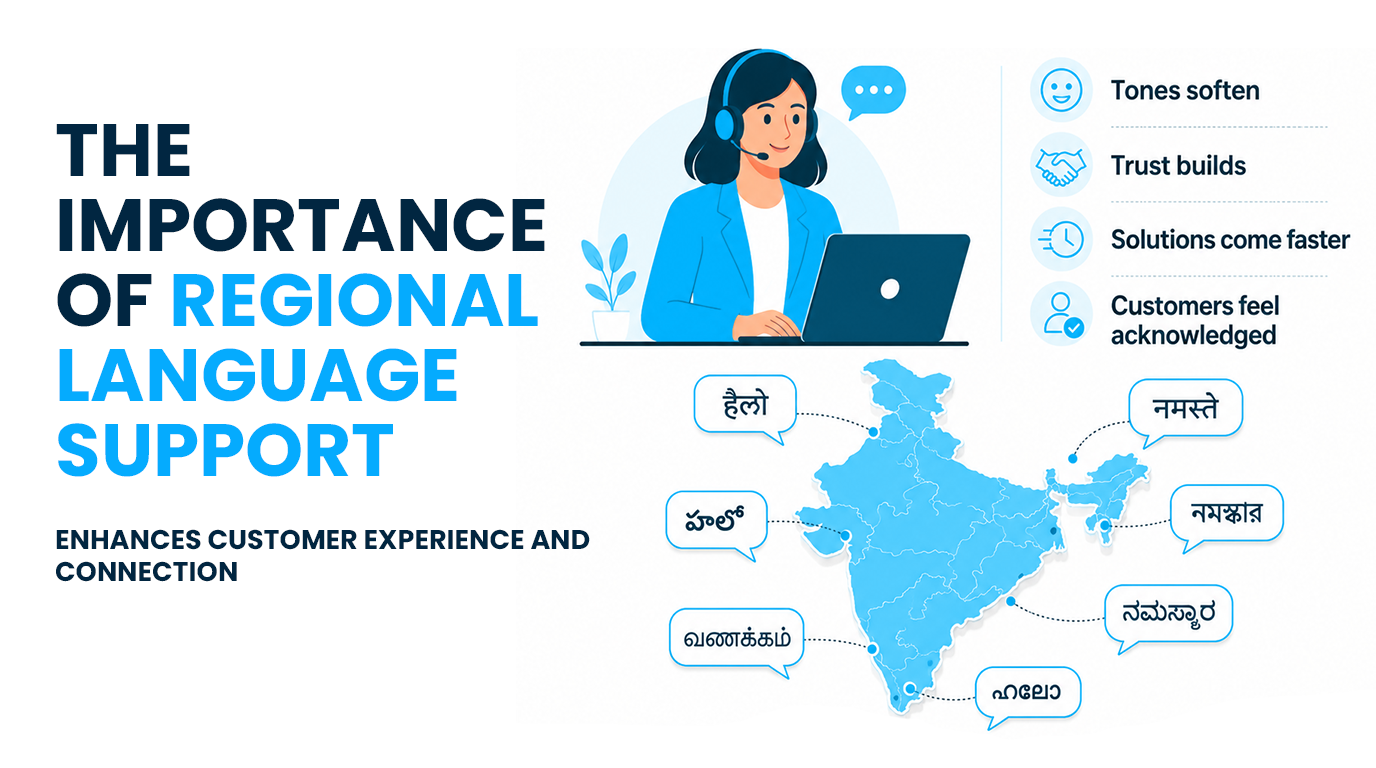
But many businesses still rely on old translation workflows.
Documents are exported by hand. Content is pasted into spreadsheets or sent out via email to others. Revisions are made independently in each of the language versions. Final checks are done manually, typically under time pressure.
This process causes two serious concerns.
Firstly, operational delays grow considerably. Another round of review for each language.
Secondly, the consistency of the communication starts to break down.
The fact that the same term in different languages might affect the understanding of the client. This is especially true for financial communication, where every word matters.
This area is where the infrastructure for language AI is beginning to shift the debate. Leading BFSI players are beginning to include multilingual workflows in communication operations instead of treating translation as a downstream function.
Platforms that are dedicated to document translation and multilingual compliance workflows, such as Indian language AI platforms like Devnagri AI, are increasingly being evaluated more on governance control, workflow visibility and terminology consistency in regulated communication environments, not merely on translation speed.
How Poor Regulatory Communication Affects Customer Trust in BFSI
Customers may not understand internal operational complexity. But they immediately notice communication gaps.
They notice when one branch shares different information from the mobile app.
They notice when translated notices feel unclear or mechanically written.
And in BFSI, confusion directly affects trust.
According to a PwC survey on consumer banking, trust and clarity remain central drivers of customer retention in financial services, particularly during moments involving policy or account-related communication (Source) .
Poor communication rarely appears first as a compliance problem. It usually appears first as a customer experience problem.
Then it escalates.
How Manual Translation Workflows Increase BFSI Compliance Risk?
One of the least discussed consequences of manual workflows is audit complexity.
Most BFSI institutions maintain communication records across multiple disconnected repositories. Approvals may exist in email chains. Final documents may sit in shared folders. Regional versions may be stored externally by vendors. Channel-specific copies can be saved independently in CRM or alerting systems.
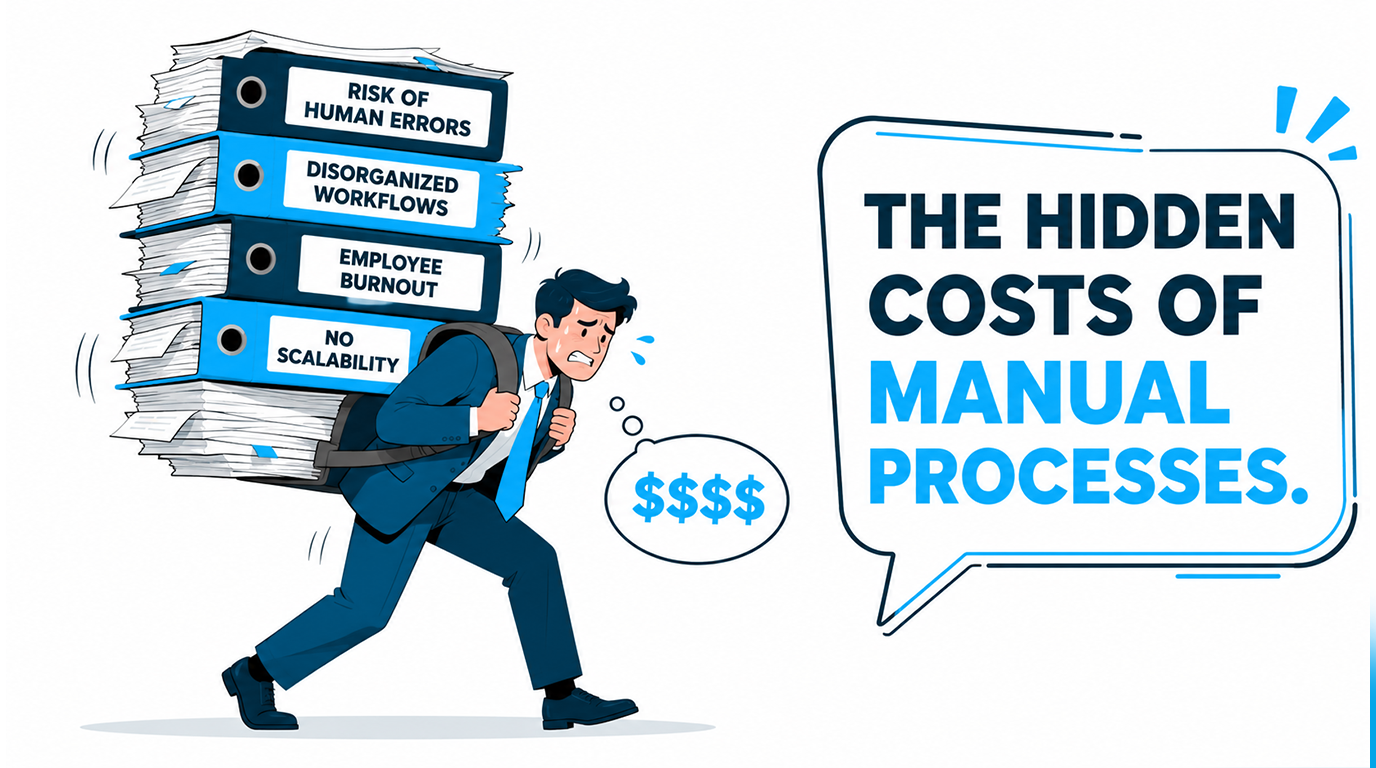
It's exhausting to reconstruct the history of communications during audits or compliance checks.
- Which version got approved?
- Who approved the version?
- When was the customer notification sent out?
- Which language versions were distributed?
- Was the branch communication aligned with the digital version?
Manual systems make these questions surprisingly difficult to answer quickly. That observation feels particularly true in BFSI communication environments today.
Why Audit Tracking Becomes Difficult With Manual Compliance Processes
Regulatory communication is often time-sensitive.
Policy updates, compliance adjustments, fraud advisories or emergency operational scenarios require quickness. Institutions may need to reach millions of people quickly and make sure all channels are trusted sources of information.
Manual workflows are under stress. They're struggling.
Updates filter down to teams. It does take time to do channel-specific formatting. Translation cycles are being delayed.
The result is inconsistent communication across the customer journey.
In fast-moving regulatory environments, slow communication creates both operational and reputational risk.
And increasingly, customers compare BFSI communication standards not with other banks, but with the responsiveness they experience from digital-first technology platforms.
That comparison is changing expectations across the industry.
BFSI Institutions Need Smarter Communication Workflows
Modern BFSI communication infrastructure requires more than faster translation or better document storage. It requires workflow intelligence.
Institutions are now prioritising systems that combine:
- Centralised communication management
- Real-time approval tracking
- Multilingual workflow orchestration
- Audit-ready document visibility
- Controlled version management
- Integrated distribution across channels
- Consistent terminology governance
The shift is not only technological. It is operational.
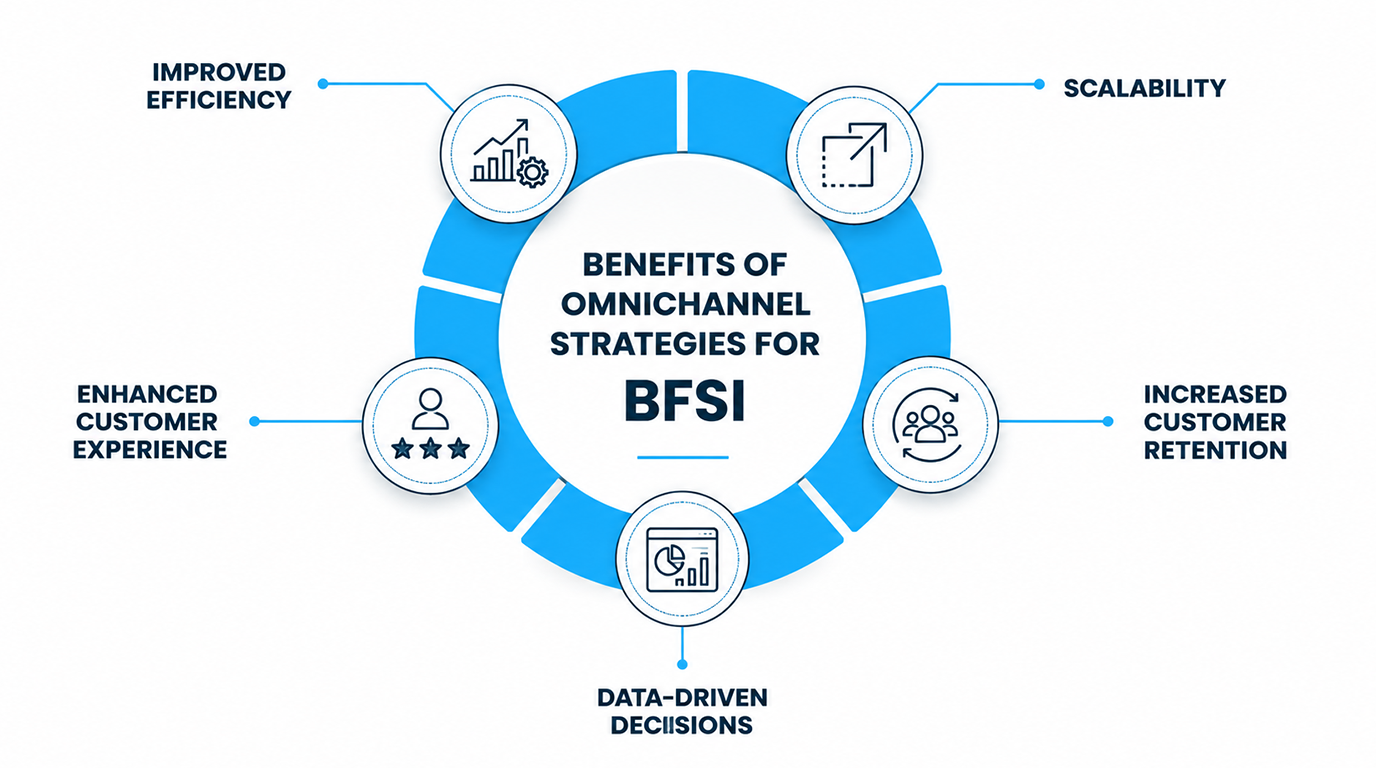
Forward-looking BFSI leaders are beginning to treat regulatory communication as infrastructure rather than administrative support work.
That mindset changes investment priorities.
Instead of asking, "How do we translate faster?" institutions are asking broader questions:
- How do we reduce coordination friction?
- How do we improve audit readiness?
- How do we maintain communication consistency across languages and channels?
- How do we create visibility across the entire RBI circular deployment workflow?
These are infrastructure questions now.
And increasingly, the answers involve automation, workflow integration, and language AI systems purpose-built for India's multilingual regulatory environment.
Why Modern BFSI Organisations Are Replacing Fragmented Manual Workflows
Manual workflows once worked because communication volumes were manageable and channels were limited.
That environment no longer exists.
Today's BFSI institutions operate in a high-frequency communication ecosystem where speed, multilingual accuracy, governance visibility, and audit readiness all matter simultaneously. Regulatory communication has evolved from a documentation exercise into a strategic operational capability.
Institutions that continue relying heavily on fragmented manual processes will likely face increasing pressure, not only from compliance complexity but also from customer expectations and operational inefficiency.
The organisations modernising these workflows are now positioning themselves differently. They are building communication systems that are faster, more traceable, multilingual by design, and operationally scalable.
And in modern BFSI, that capability is becoming difficult to ignore.