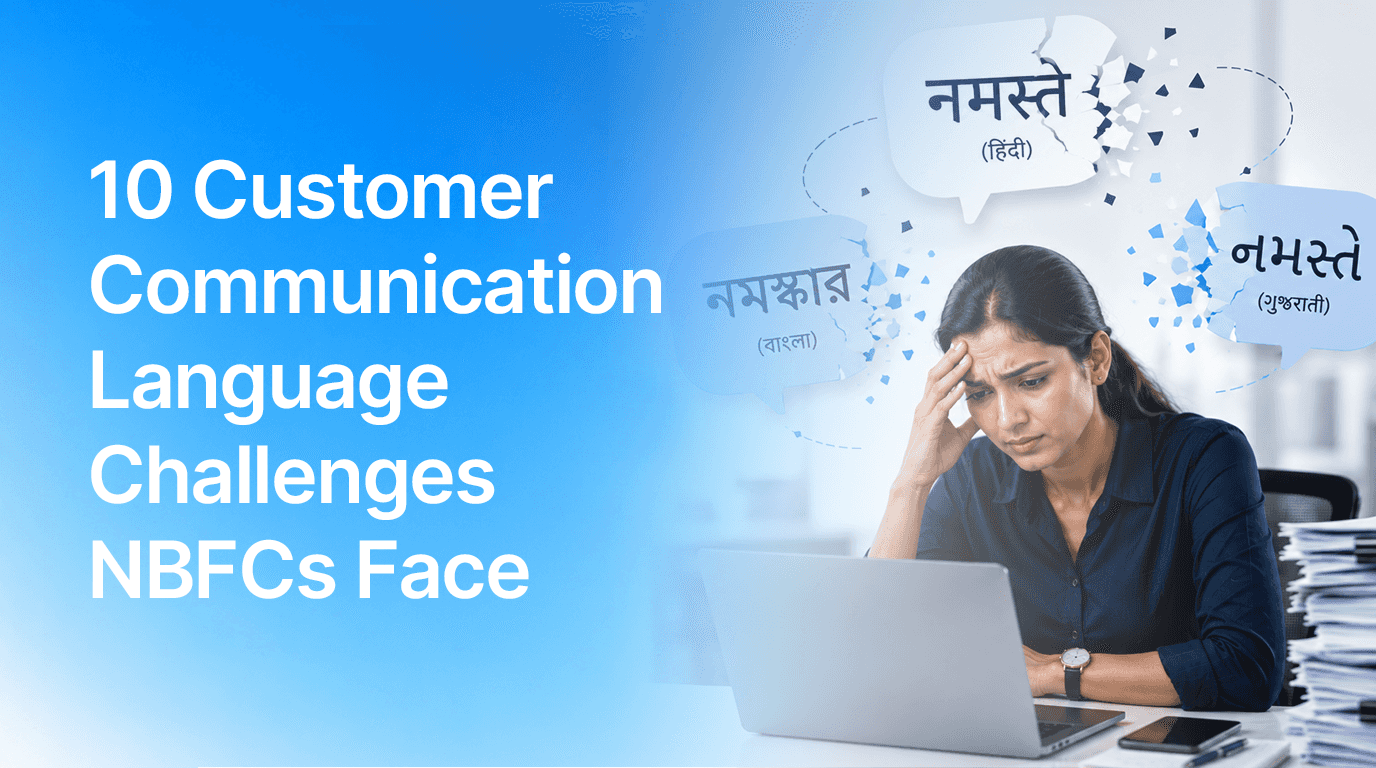
NBFCs are growing faster than most banks in India right now, especially in tier 2 and tier 3 markets. Growth like that tends to expose a problem lenders have quietly lived with for years, though. NBFC customer communication has not kept up with what customers now expect.
Borrowers want clarity on their loan terms. They want quick answers when something goes wrong. And they want updates that actually reach them in a language they understand, not one that happens to be convenient for the lender. Skip any of that, and the cost shows up fast, in onboarding drop-offs, in rising complaint volumes, and in collections calls that go nowhere no matter how many times you dial.
Challenges in multilingual communication for NBFCs stop being a support issue at some point. They become a business risk. The encouraging part is that AI-powered language infrastructure has matured enough to close most of these gaps without needing more headcount or slower operations.
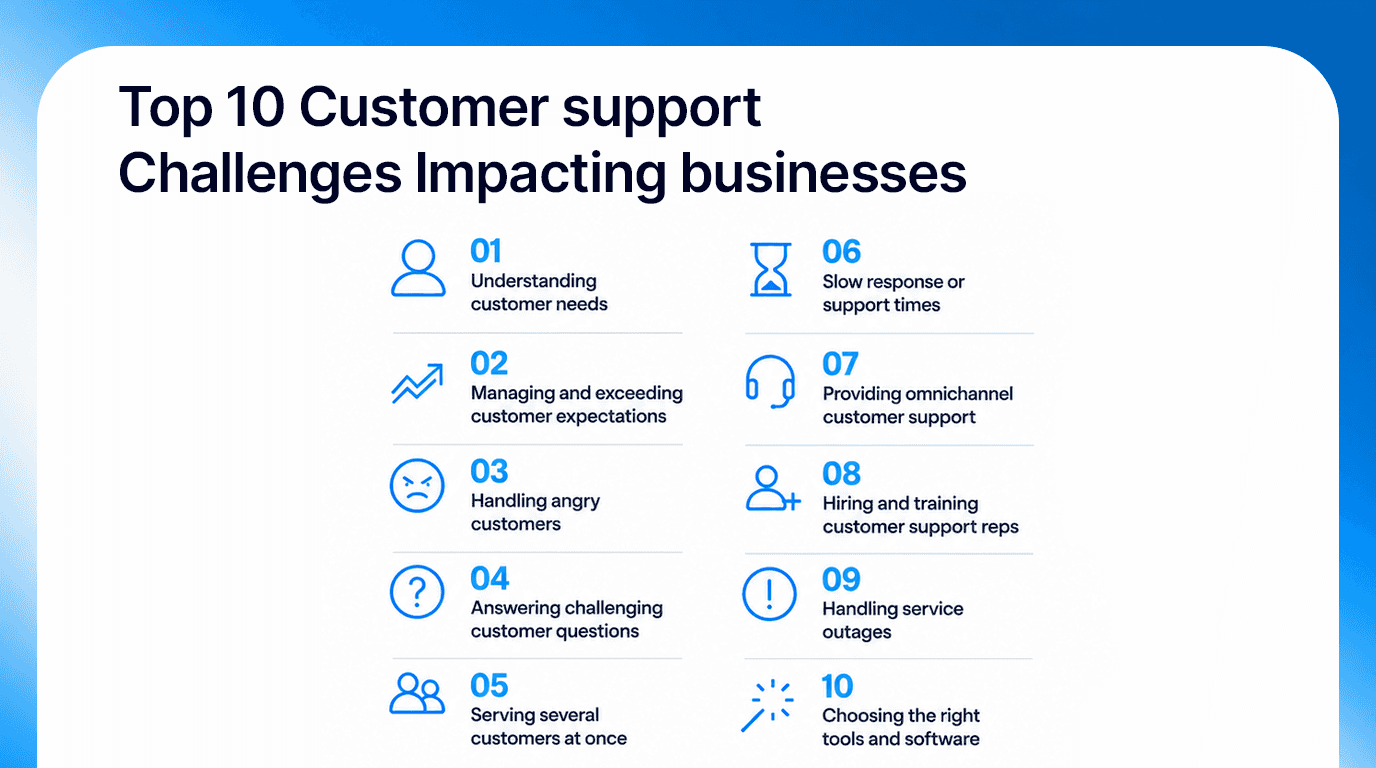
10 Common Customer Communications Challenges for NBFCs
1. Lack of transparency in loan communication
Interest rates, processing fees, and repayment schedules. All of it tends to get buried in fine print or explained in language the borrower does not fully follow. When customers do not understand what they signed up for, trust erodes long before the first EMI is due.
2. Poor grievance communication and resolution
Complaints get logged against NBFCs well enough. What rarely happens is an update reaching the customer in plain language, on time. A borrower chasing a refund or a wrongly deducted charge should not need three phone calls just to hear where things stand that an OCR for financial documents can resolve.
3. Fragmented communication across channels
An SMS in English, a call in Hindi, and an app notification that somehow contradicts both. Without a connected communication layer, each channel tells its own slightly different version of the story.
4. Challenges in collections and recovery communication
Generic reminder templates and one-size-fits-all IVR scripts rarely account for regional language, tone, or the borrower's actual context. The result is predictable: lower right-party contact rates and a growing pile of manual follow-ups.
5. Lack of personalised customer communication
Most NBFC communication is still written for the average customer, and the average customer does not exist. A first-time borrower needs a different tone, different detail, and different pacing than someone on their fourth loan.
6. Regional language and localisation gaps
India runs on more than twenty widely spoken languages. A large share of NBFC customer experience are simply more comfortable in a regional language than in English or even Hindi, and communication that ignores this reality gets ignored right back.
7. Poor communication around KYC and documentation
Document requirements change often, and customers are frequently left guessing at what is pending, what got rejected, and why. It sounds like a small thing. It is actually one of the biggest reasons onboarding stalls across the industry.
8. Slow customer support and resolution
Calls, chat, and email often overwhelm support teams, and they frequently lack the language coverage to serve every customer properly. Response times slip. So does customer confidence, quietly and then all at once.
9. Unclear digital lending disclosures
Key fact statements and other mandated disclosures exist to protect the borrower. But if you deliver them in dense, purely English text, they fail at the one job they were built to do.
10. Lack of proactive customer education
Most NBFCs only reach out when something is due or something has already gone wrong. Customers rarely get plain language guidance offered proactively on how loans, charges, or credit scores actually work.
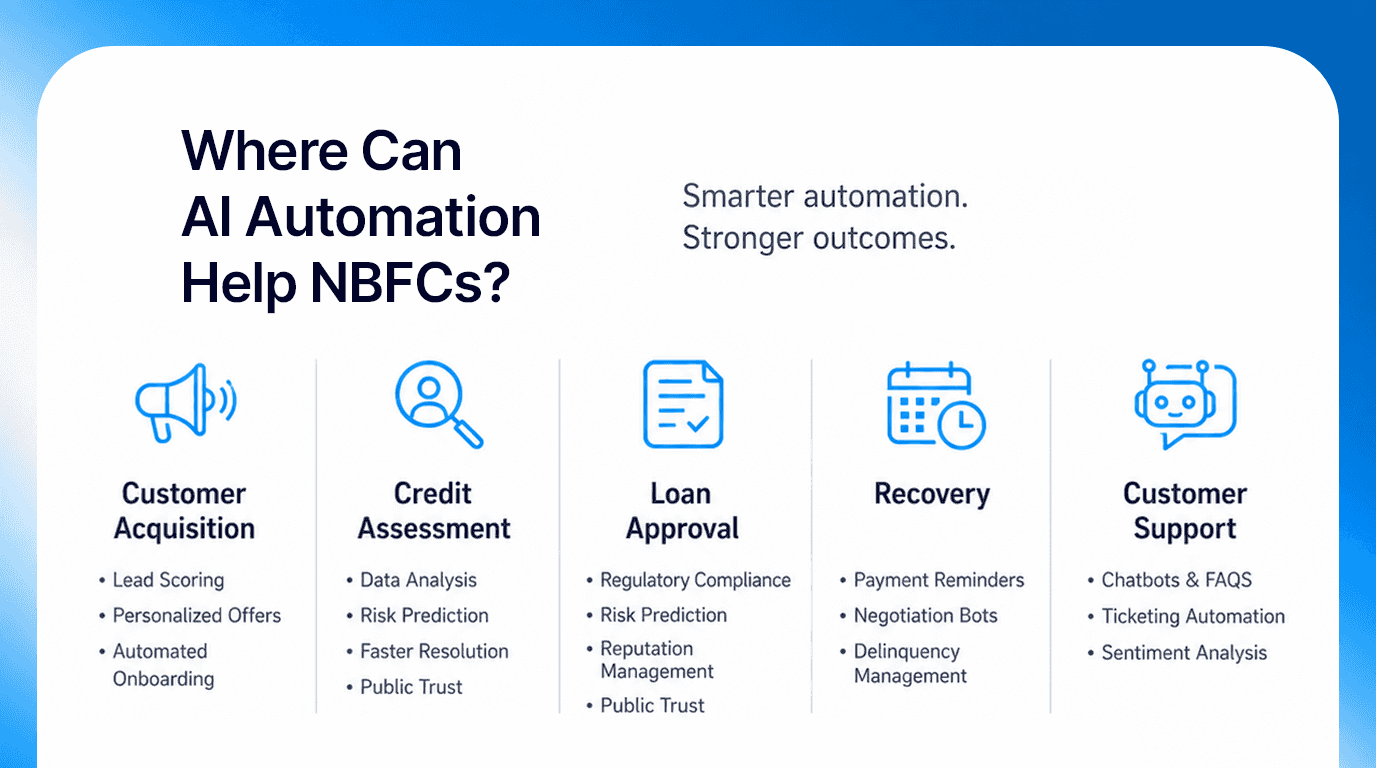
How AI Can Improve NBFC Customer Communication
Multilingual AI support
Voice and chat support that works natively across regional languages closes the gap between what customers speak and what most NBFCs are currently set up to serve.
AI-powered grievance handling
Automated routing, sentiment detection, and multilingual response generation. Together they move complaints faster, with a full audit trail behind every interaction.
Personalised collections communication
A tone engine that shifts between a soft reminder and a firmer follow-up, depending on context and language, improves recovery without wrecking the relationship in the process.
Language AI for financial services
Multilingual conversational AI can turn dense loan terms and disclosures into explanations customers actually understand, in the language they prefer, without diluting what compliance requires.
Consistent omnichannel communication
A governed language layer keeps SMS, voice, chat, and app messaging aligned, so the customer gets one consistent story no matter which channel they happen to be on.
Why Better Customer Communication Matters for NBFCs
Build customer trust.
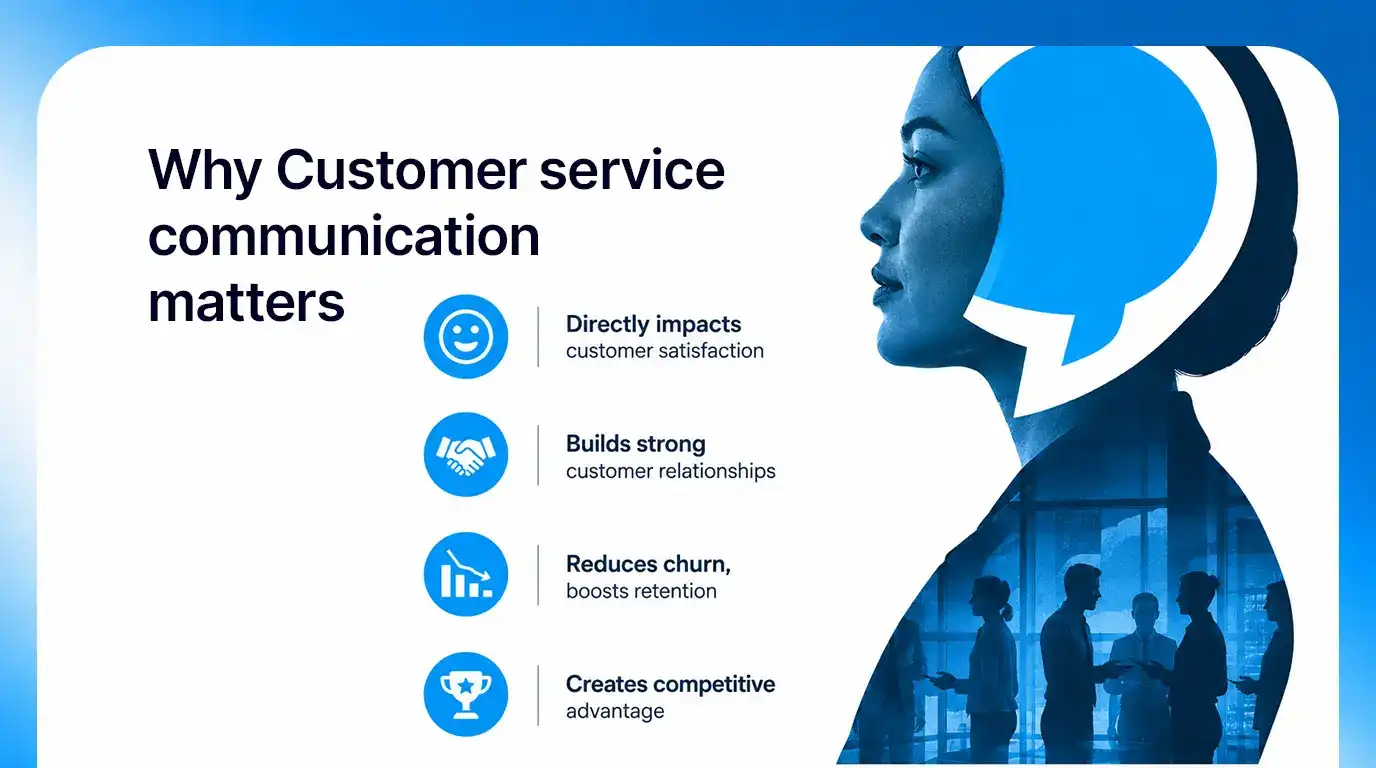
Clear, honest communication at every stage reduces the anxiety of borrowing, which is more important than most lenders realise.
Improve customer experience.
Customers judge a lender by how easy it is to get a straight answer, not only by the interest rate on offer.
Reduce support workload.
Fewer repeat calls, fewer escalations. Support teams get to spend their time on genuinely complex cases instead of basic status checks.
Improve resolution rates.
Language technology for banking and finance makes grievance handling faster and clearer, OCR solutions for NBFCs translate directly into better resolution timelines and stronger satisfaction scores.
Strengthen compliance and transparency.
Auditable, multilingual communication reduces regulatory exposure and makes it much easier to stand behind every customer interaction if anyone ever questions it.
Build customer trust.
Clear, honest communication at every stage reduces the anxiety of borrowing, which is more important than most lenders realise.
Improve customer experience.
Customers judge a lender by how easy it is to get a straight answer, not only by the interest rate on offer.
Reduce support workload.
Fewer repeat calls, fewer escalations. Support teams get to spend their time on genuinely complex cases instead of basic status checks.
Improve resolution rates.
Language technology for banking and finance makes grievance handling faster and clearer, OCR solutions for NBFCs translate directly into better resolution timelines and stronger satisfaction scores.
Strengthen compliance and transparency.
Auditable, multilingual communication reduces regulatory exposure and makes it much easier to stand behind every customer interaction if anyone ever questions it.
The Future of Customer Communication in NBFCs
From generic communication to personalised conversations
Static templates are on their way out. What is replacing them is communication that actually adapts to the customer's language, history, and context.
From reactive support to proactive assistance
Rather than waiting for a complaint to land, conversational AI for NBFCs systems are increasingly flagging risk early and reaching out before a small issue turns into a bigger one.
From multiple disconnected channels to one connected experience
The direction across the industry is clear enough. Voice, chat, SMS, and app communication are converging into a single governed layer instead of sitting in silos.
Conclusion
NBFCs don't need to communicate more. They need to communicate better.
Solving customer communication challenges in NBFCs was never really about adding more channels or sending more messages. This means being clear, consistent, personalising the experience, and resolving issues faster, all in the language the customer understands. AI-enabled, multilingual communication infrastructure makes that achievable at scale, without asking already-stretched teams to do even more.